
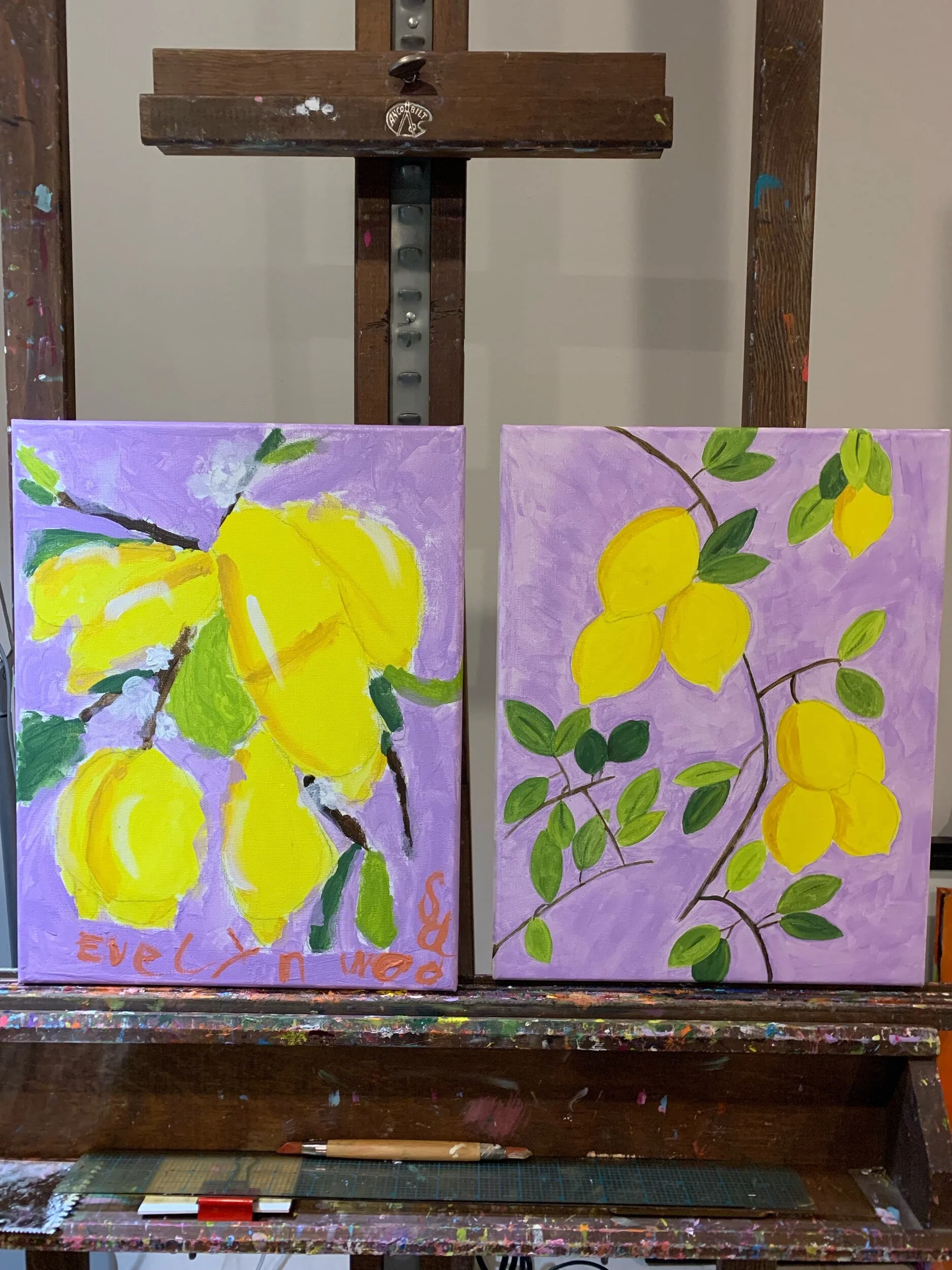
This was the sweetest painting class. The grandma arranged for her and her granddaughter to share a painting lesson.
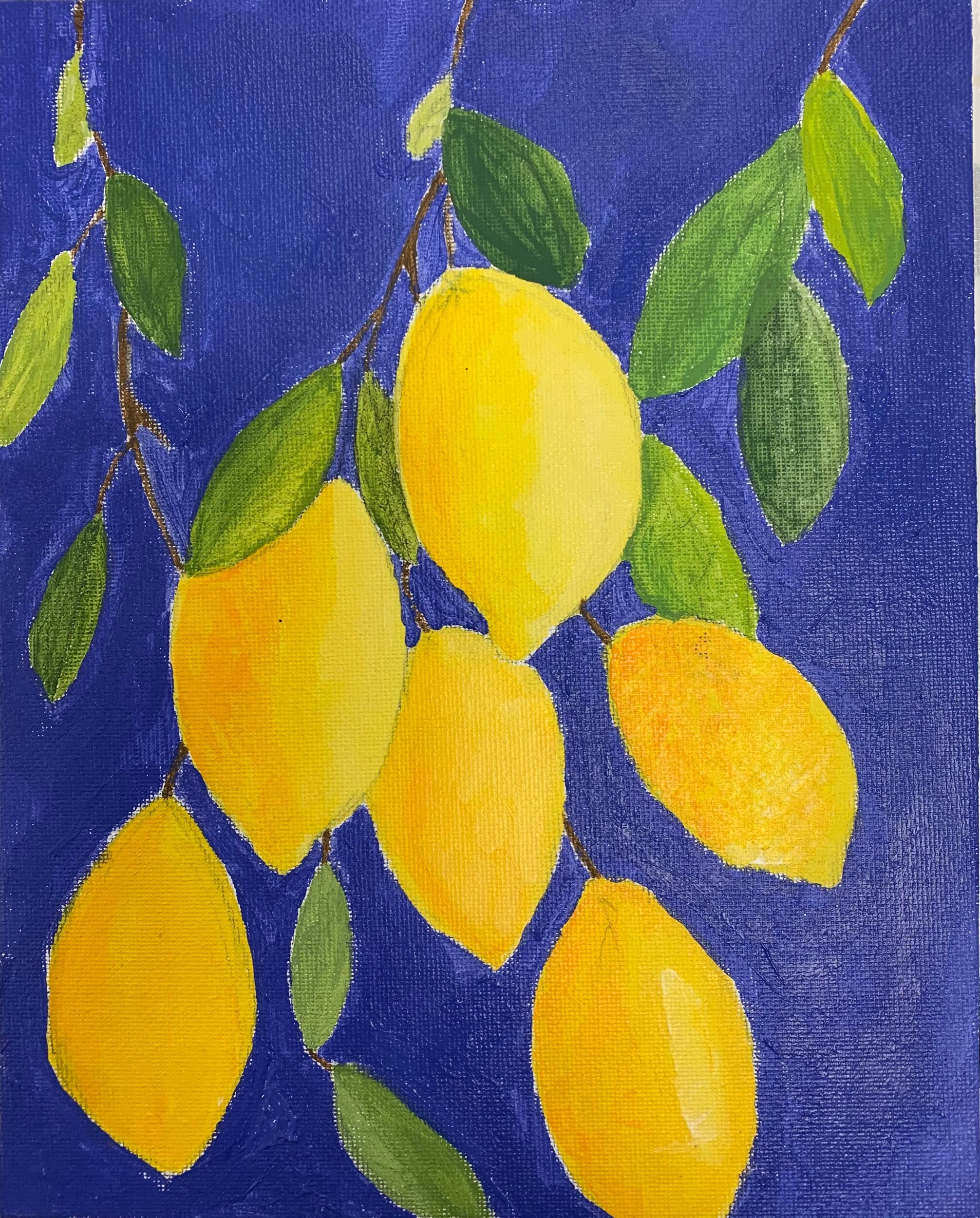
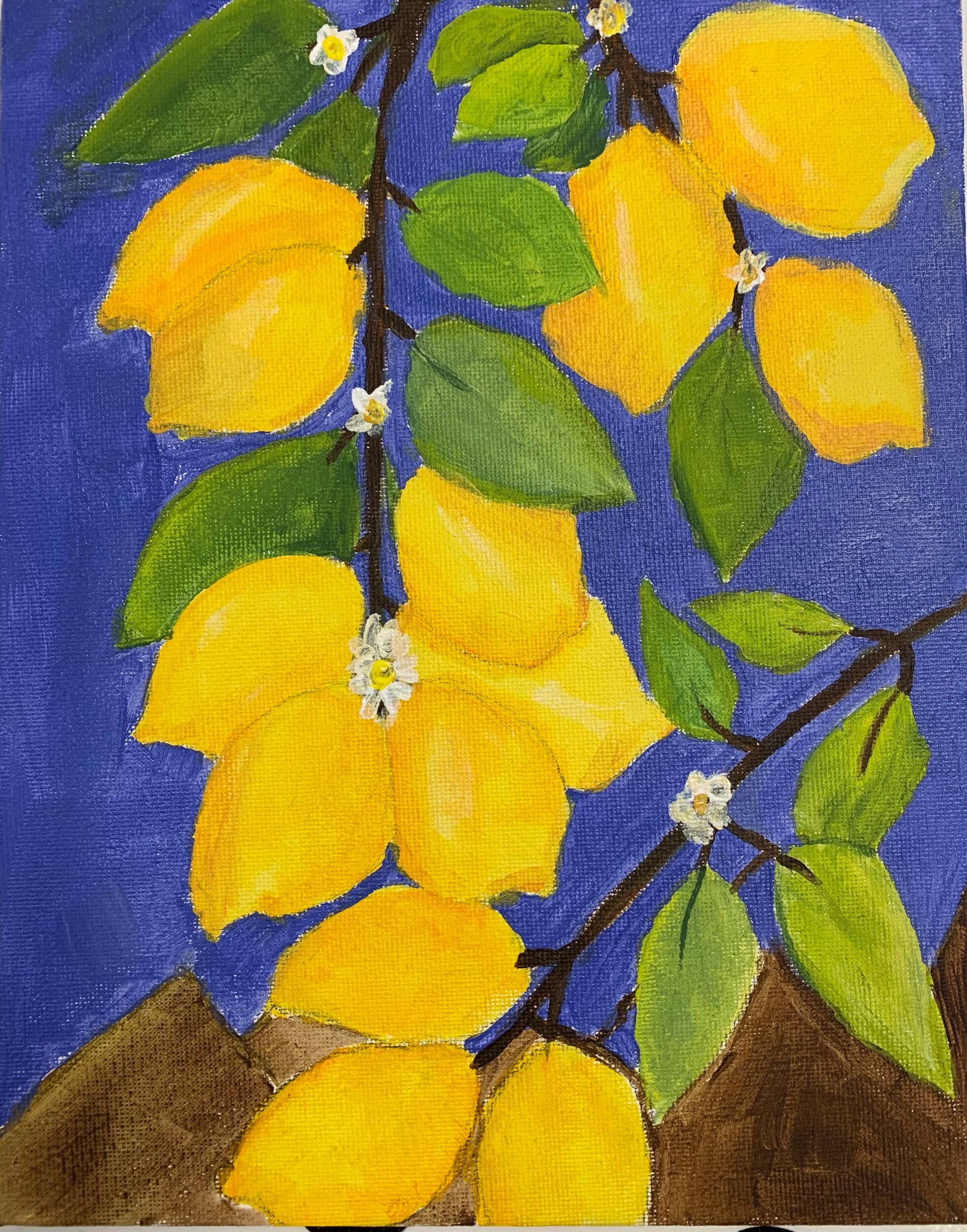
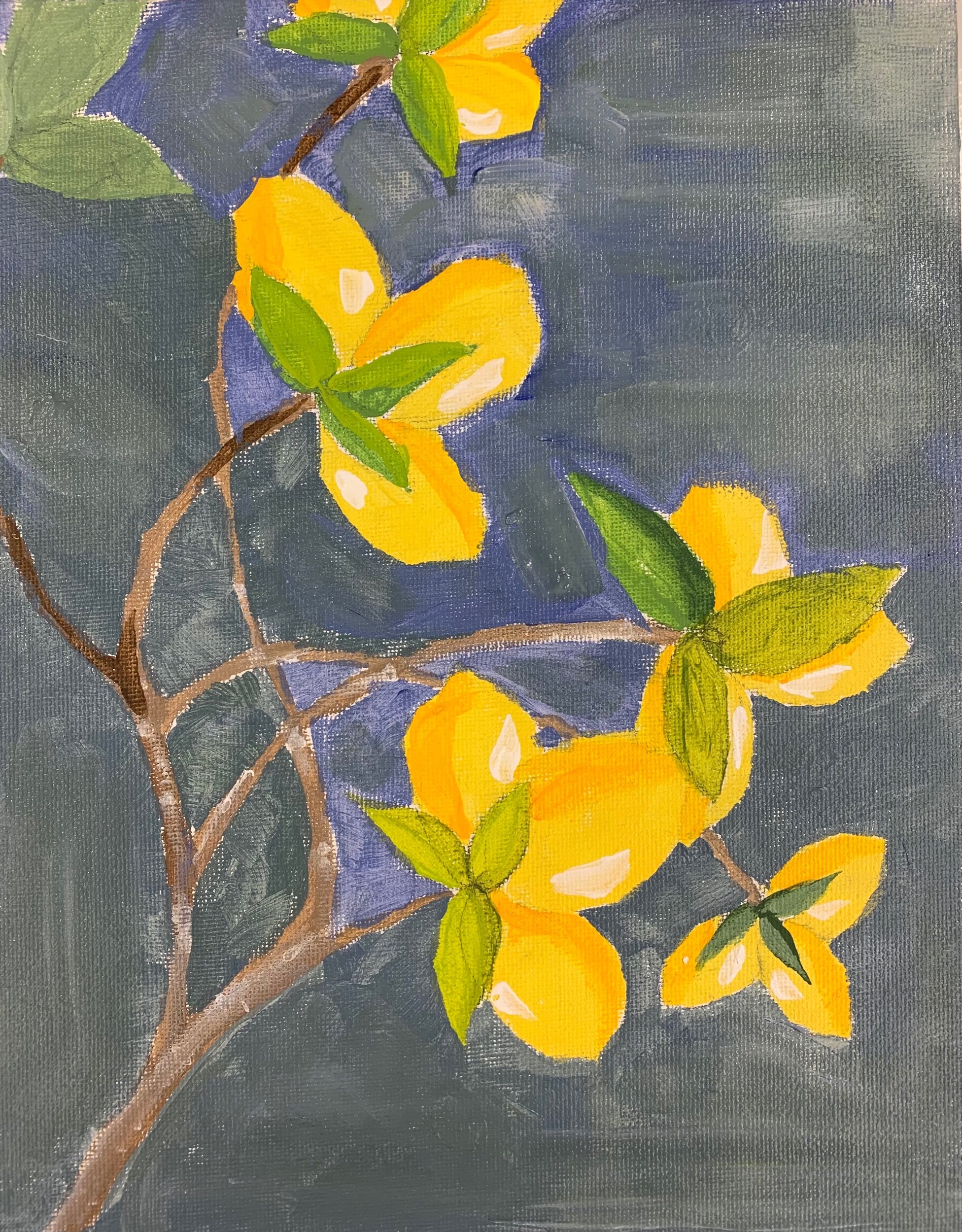
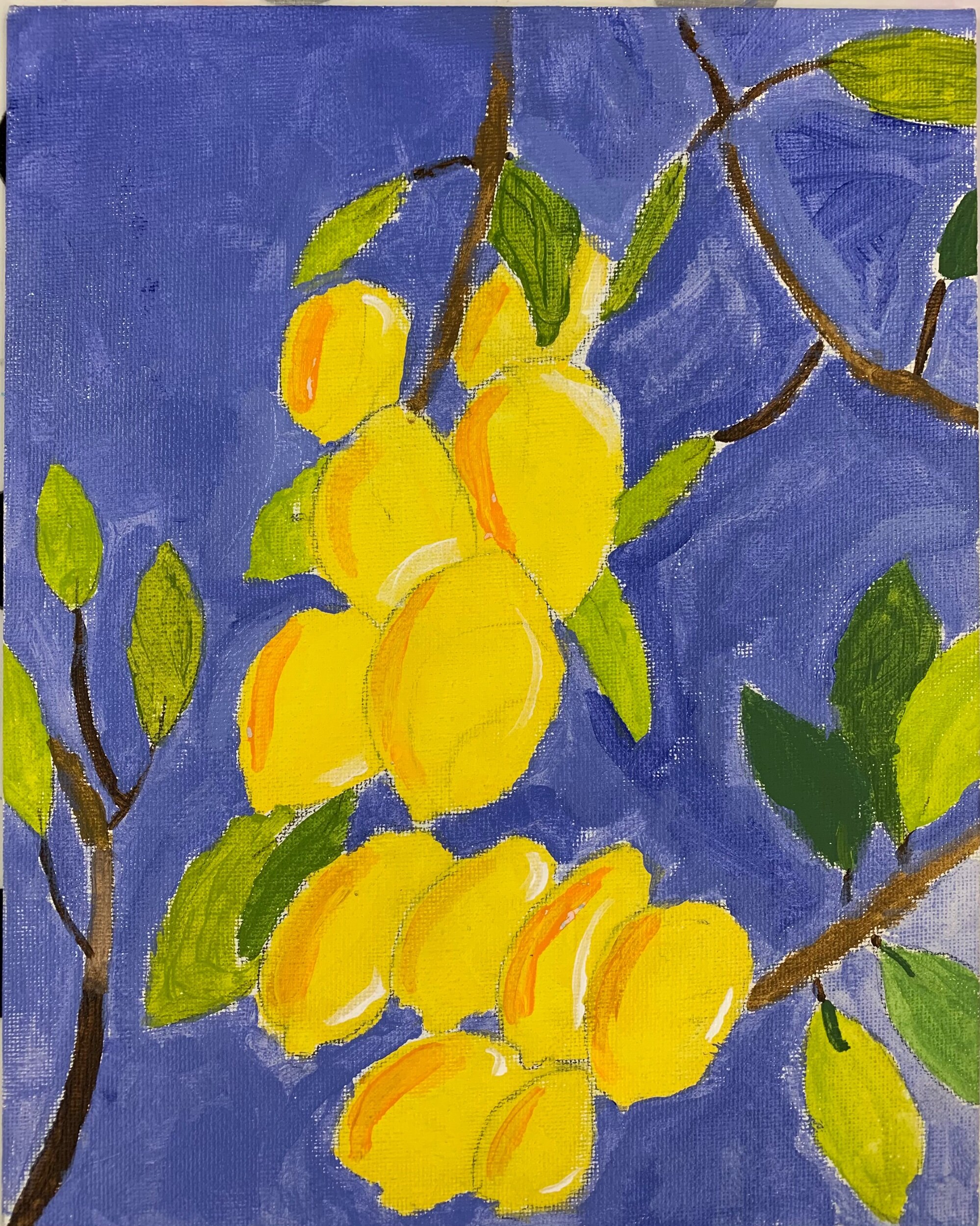
I also had an art class paint the lemons.
This was the sweetest painting class. The grandma arranged for her and her granddaughter to share a painting lesson.
I also had an art class paint the lemons.




I was honored to be able to teach a few fundamentals of acrylic painting to this group of women. We are in a “pandemic” and sometimes it’s just a relief to do something normal, something creative. Everyone chose their own sky color; did they want evergreen swags in the window or no?, snow on the peak of the steeple or no?
I was focused on teaching, refilling paint requests, offering perspective, when suddenly I discovered that the hostess of the evening had provided artichoke dip with bagel chips. I am such a sucker for a creamy dip with chips. Excuse me just a minute while I stuff my face.
Anyway, yes, the painting. Acrylic on an 11” X 14” canvas. The only “cheat” I offered was a template of the church.

Sort of in the middle of the project here with lots of detail to go.

Okay, sometimes you are just so intent on it turning out like the picture you have in your head.

The student surpasses the teacher…
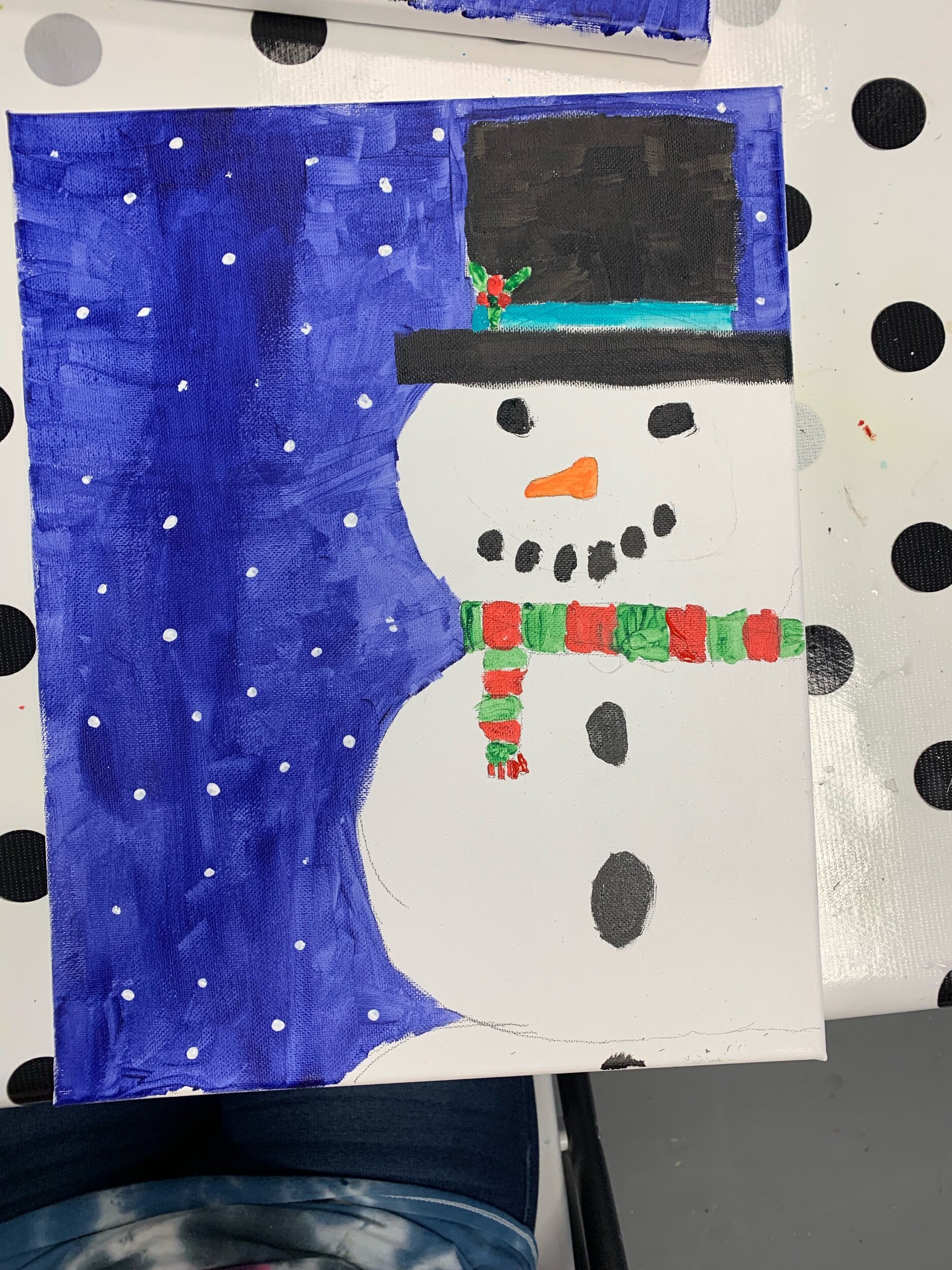
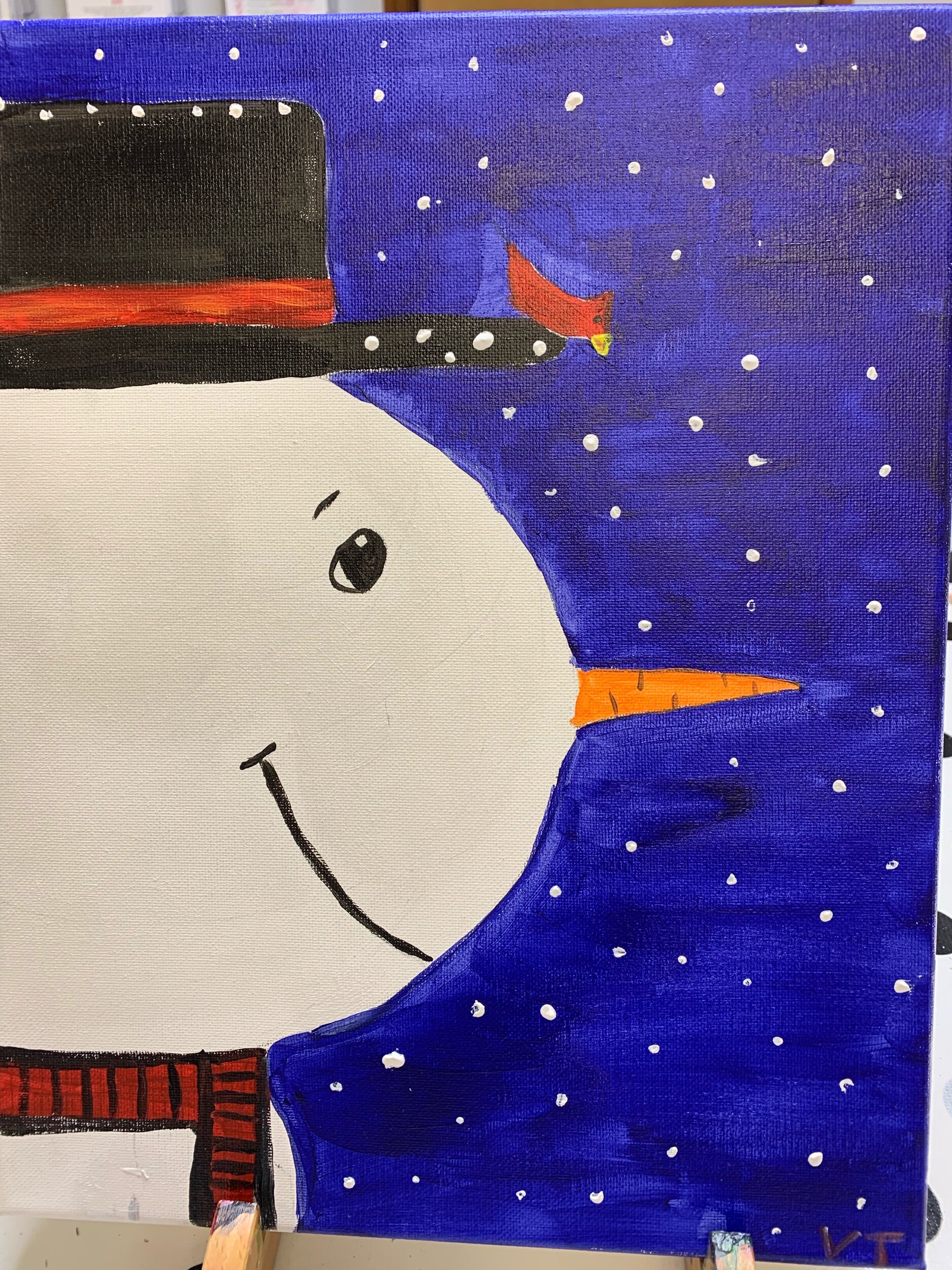
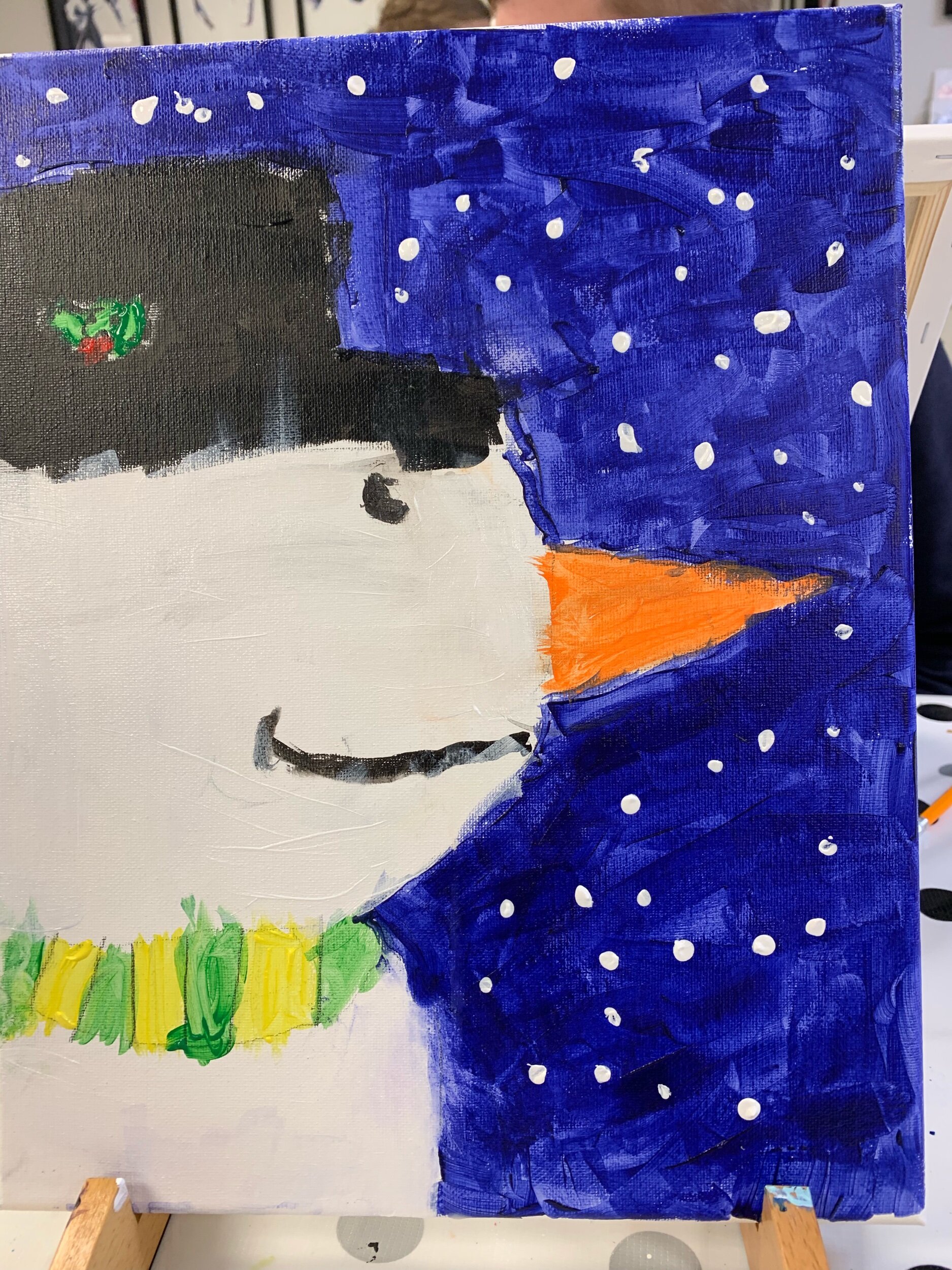
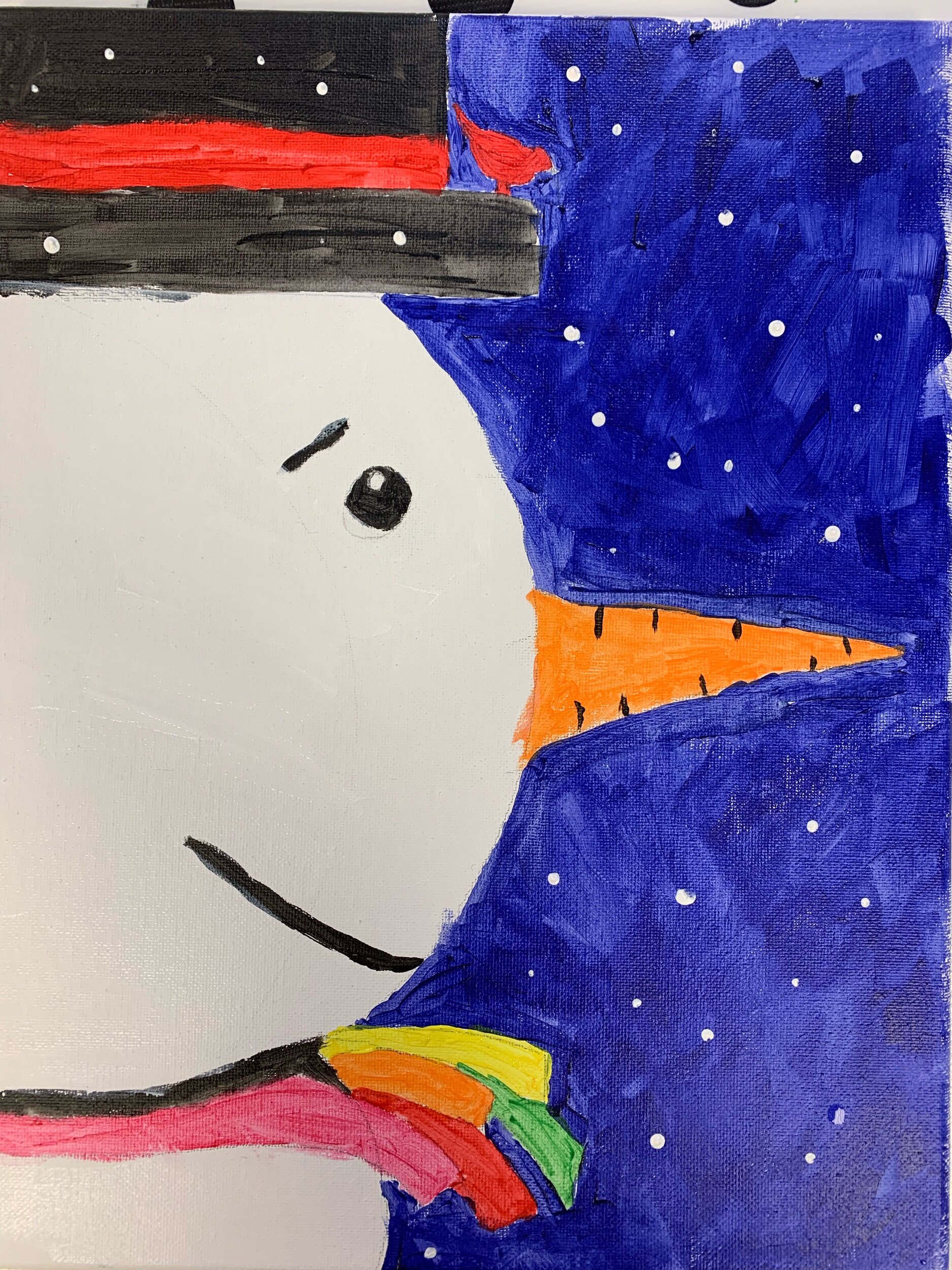
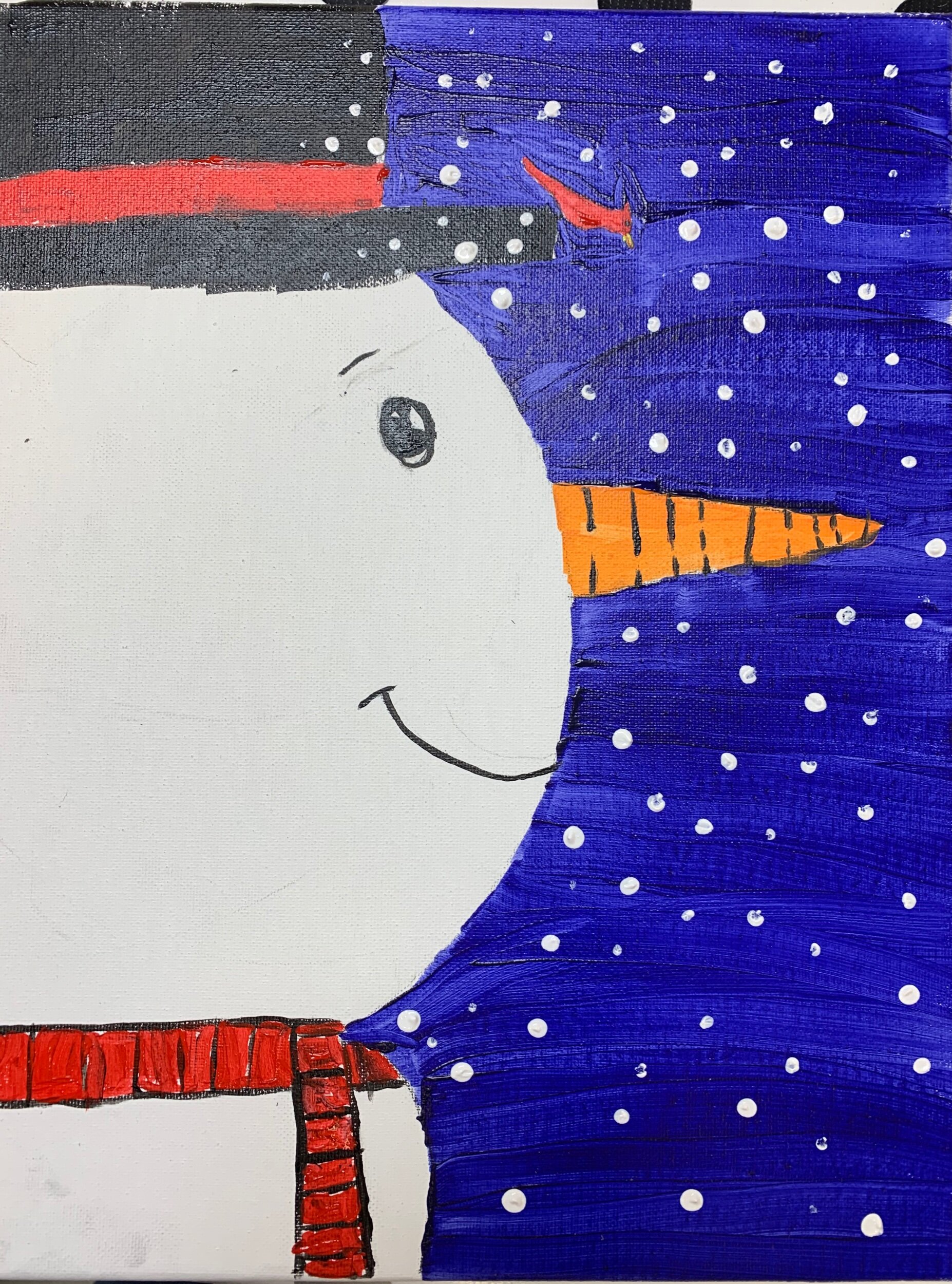
The last hurrah before we break for Christmas. Snowman in acrylic on canvas. Oh my gosh, I always love seeing the personality of each artist.

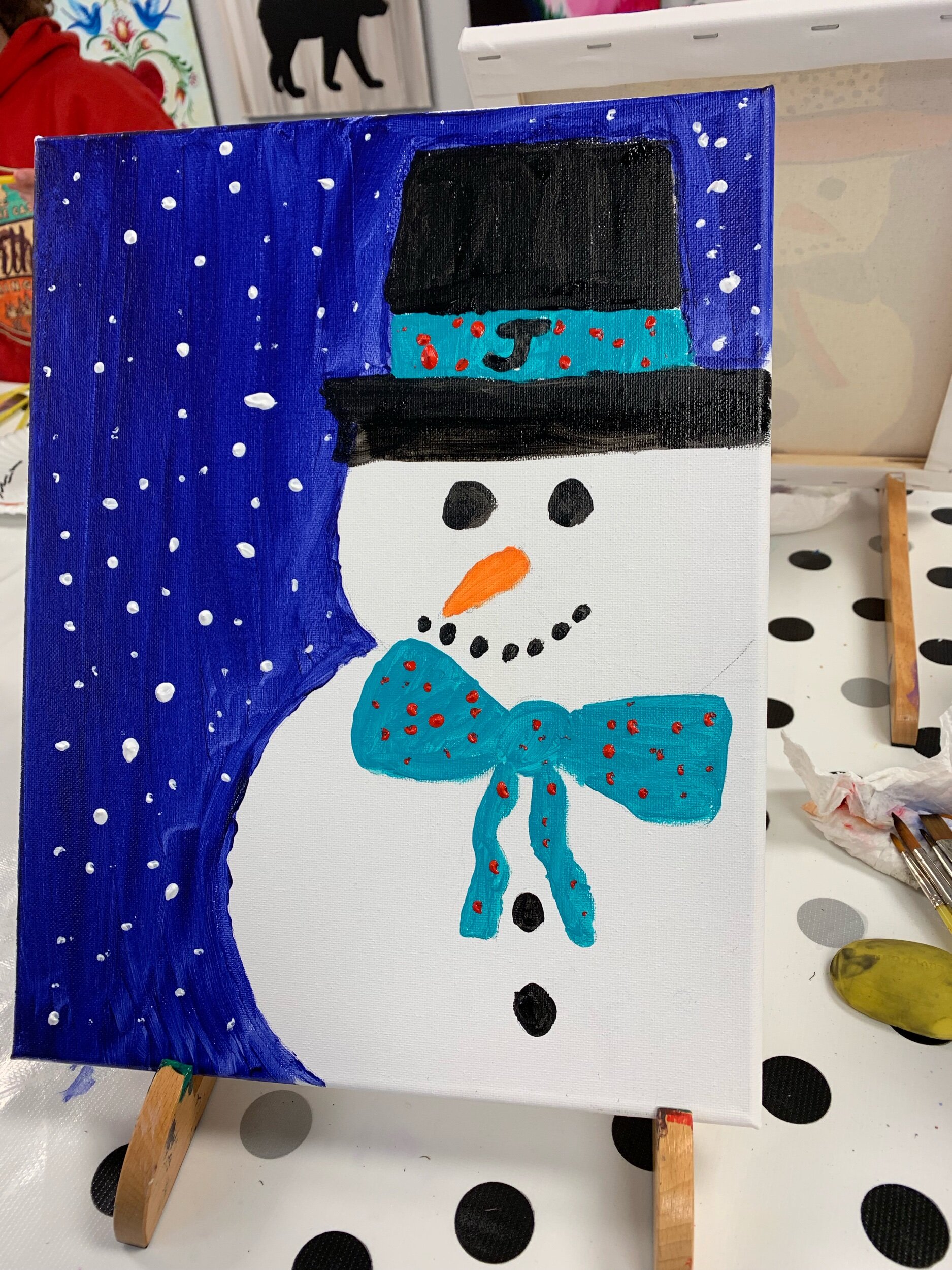


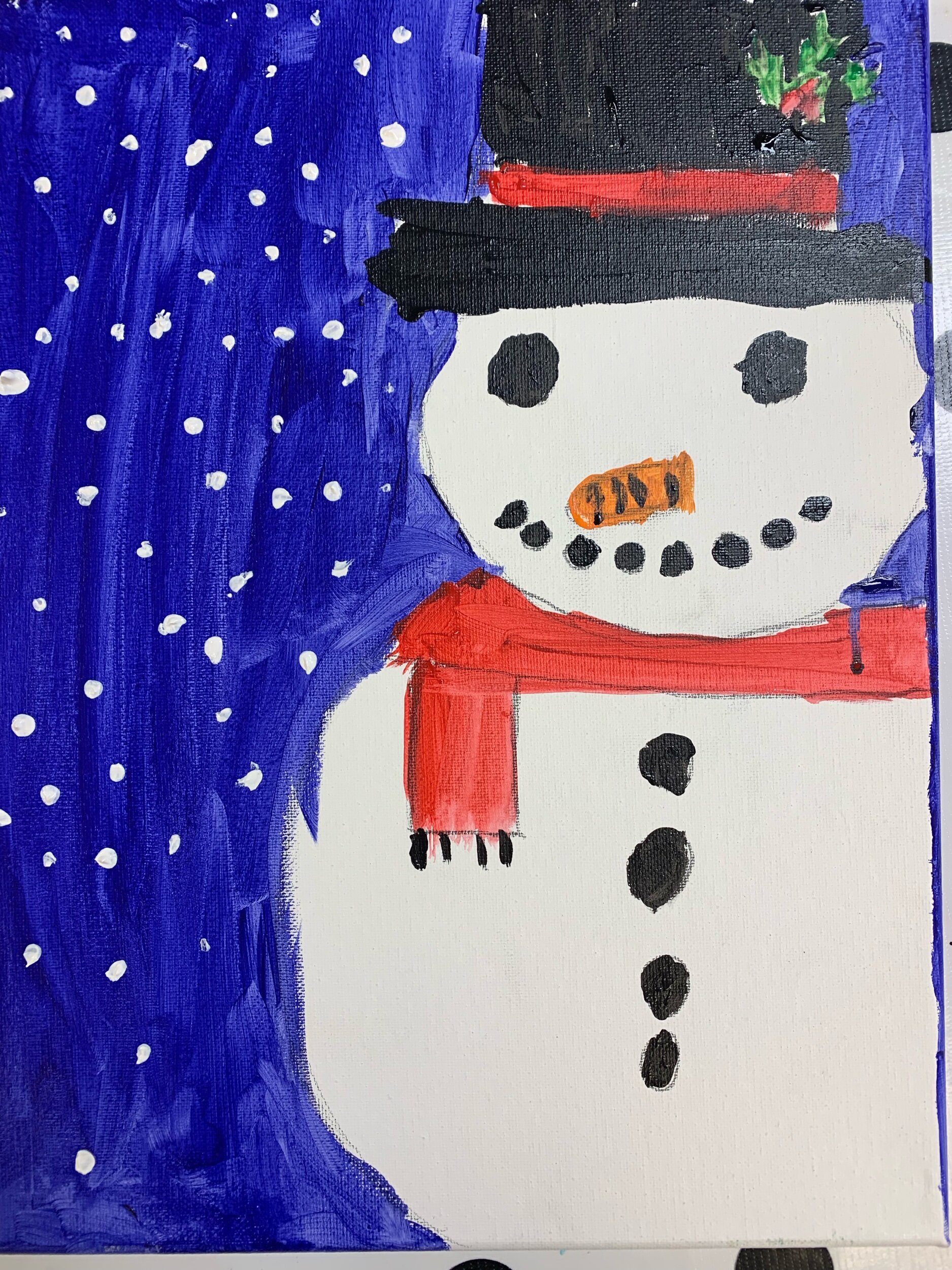
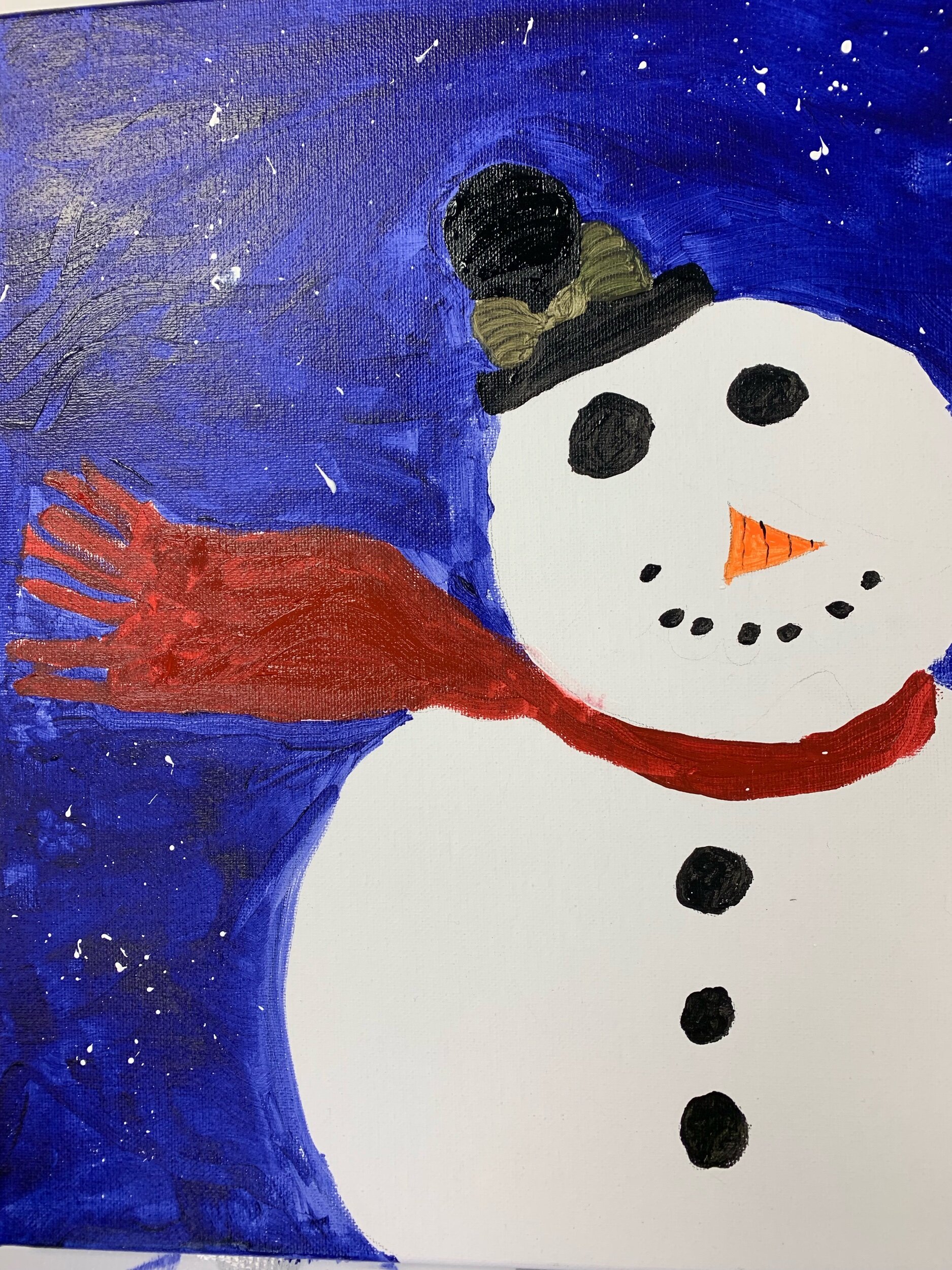




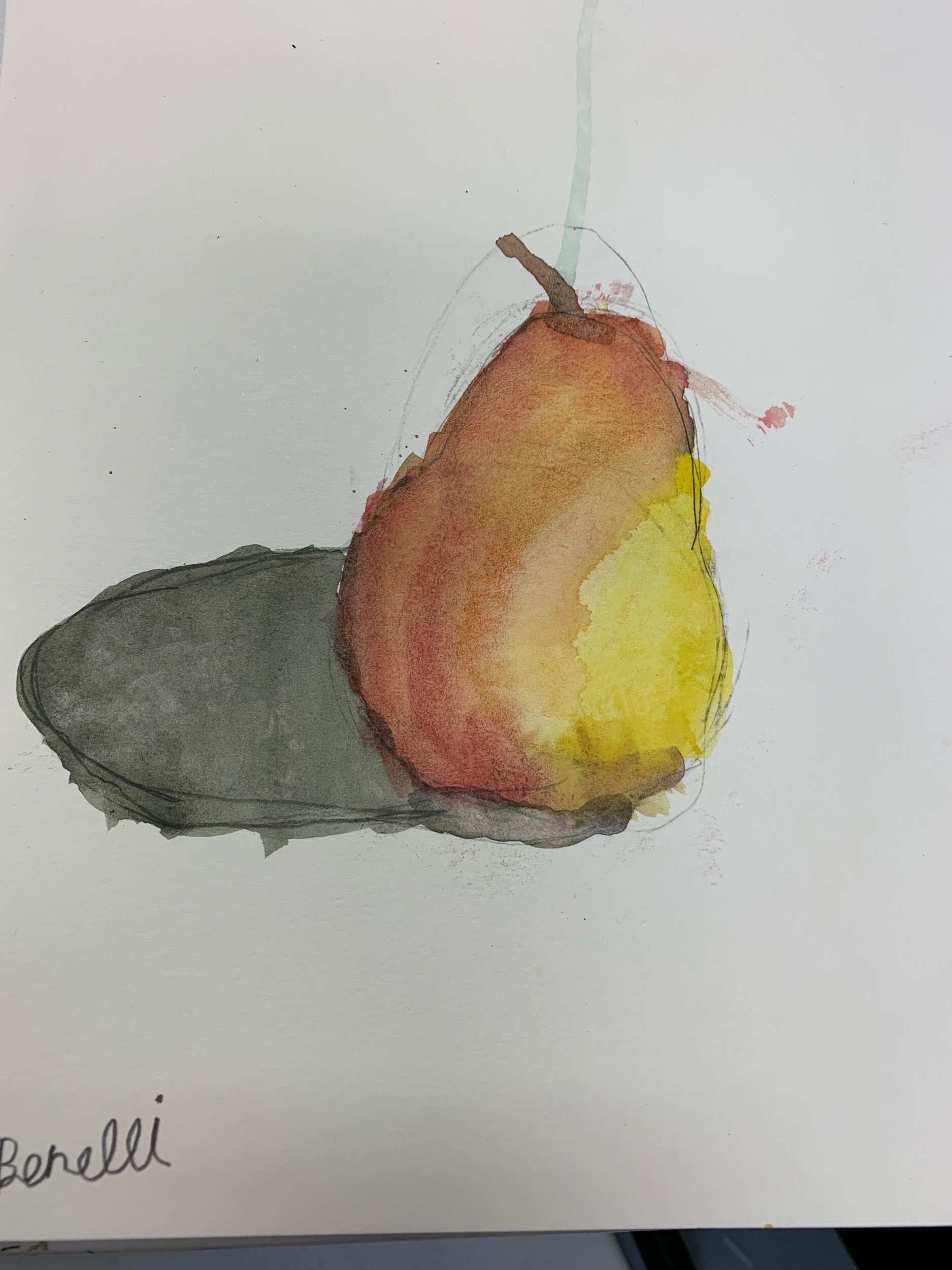
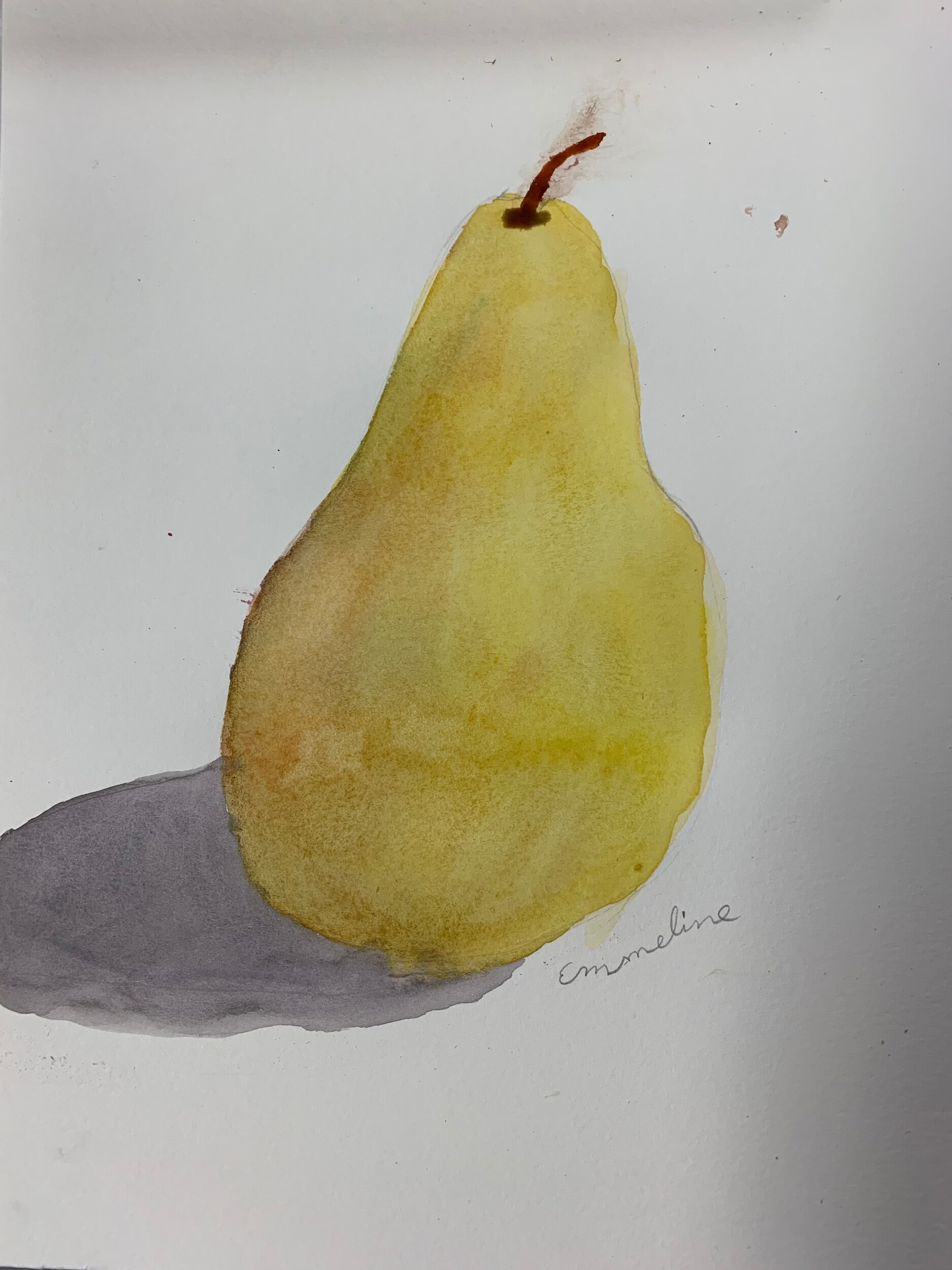
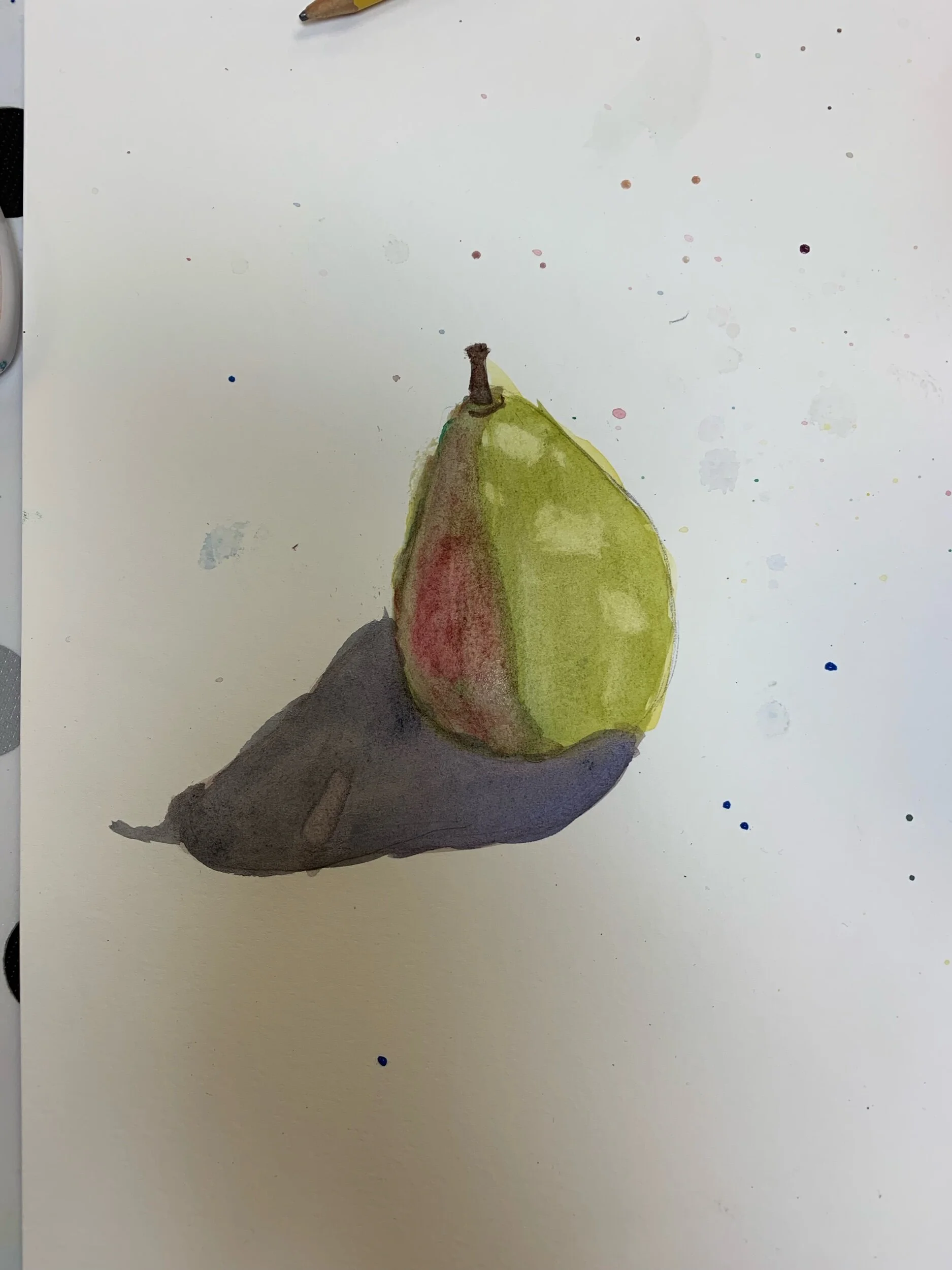
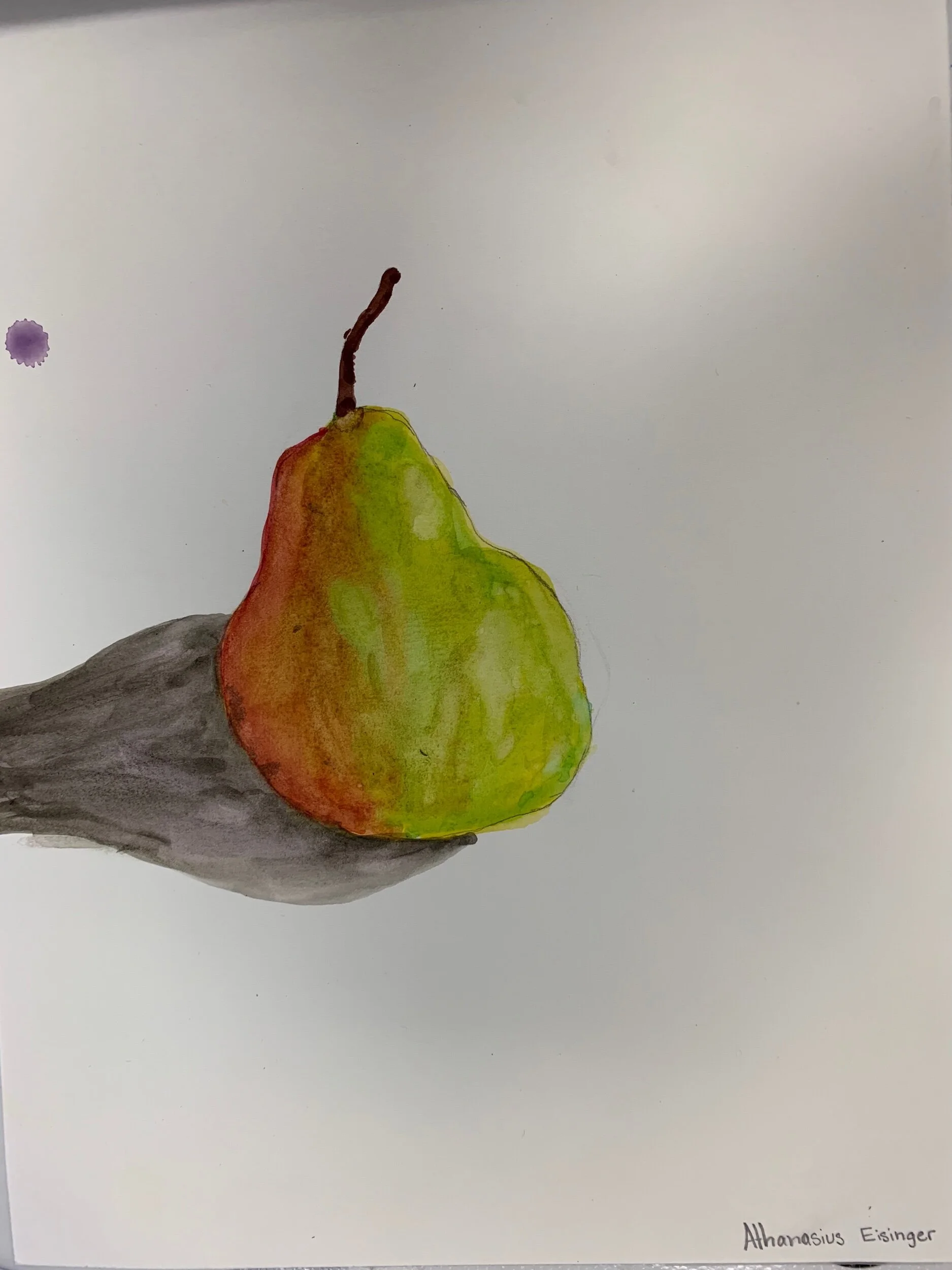
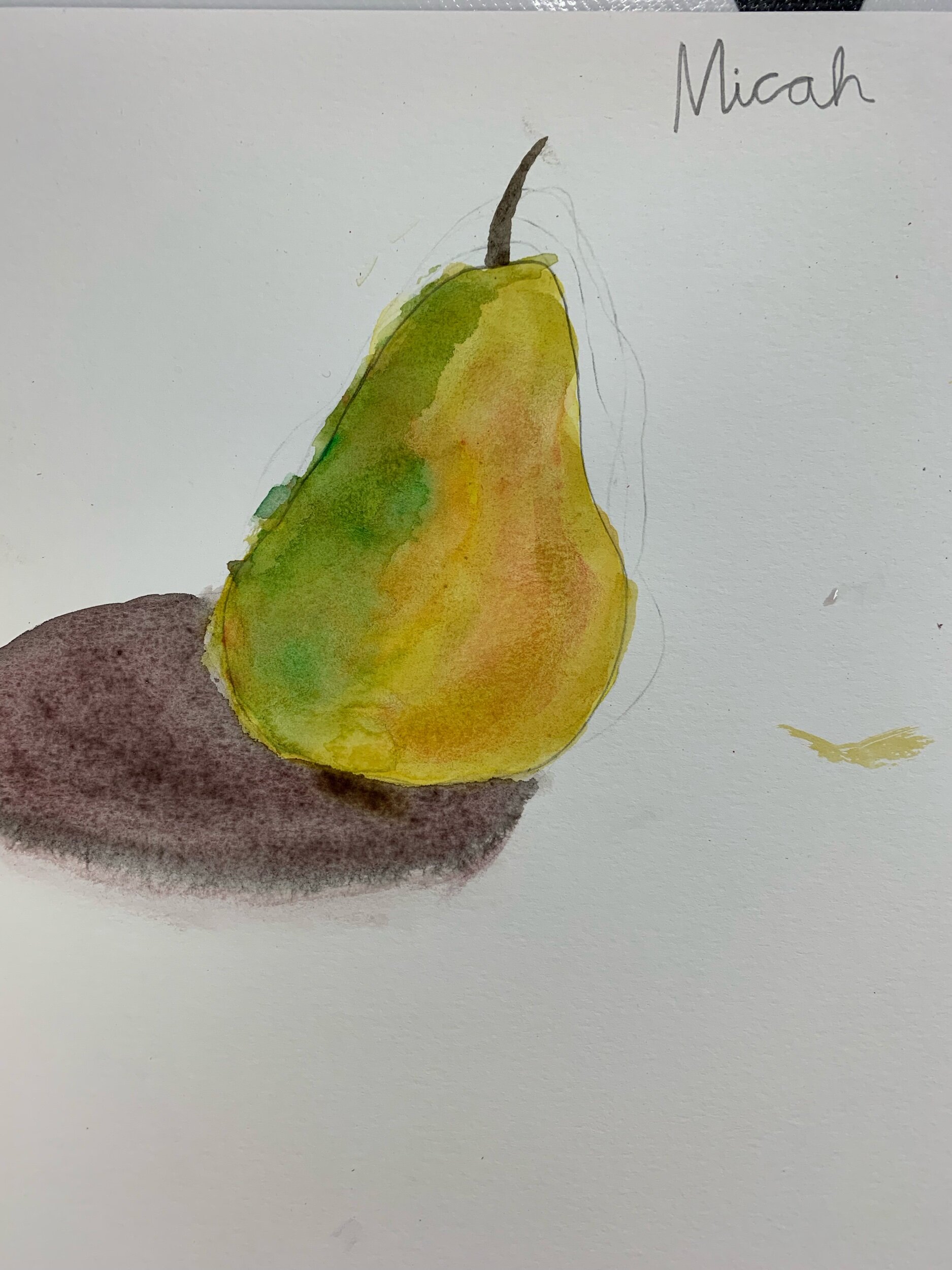
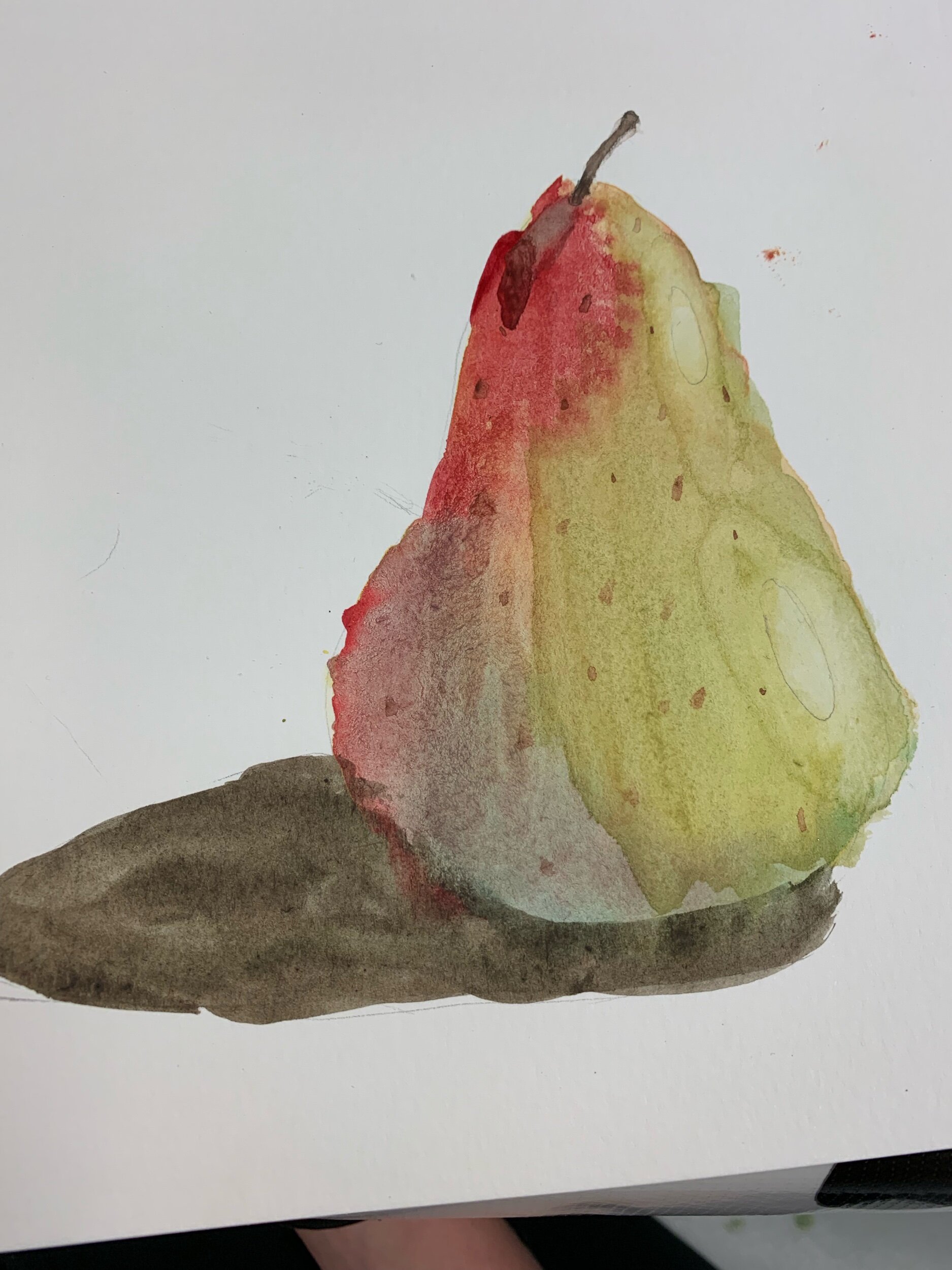
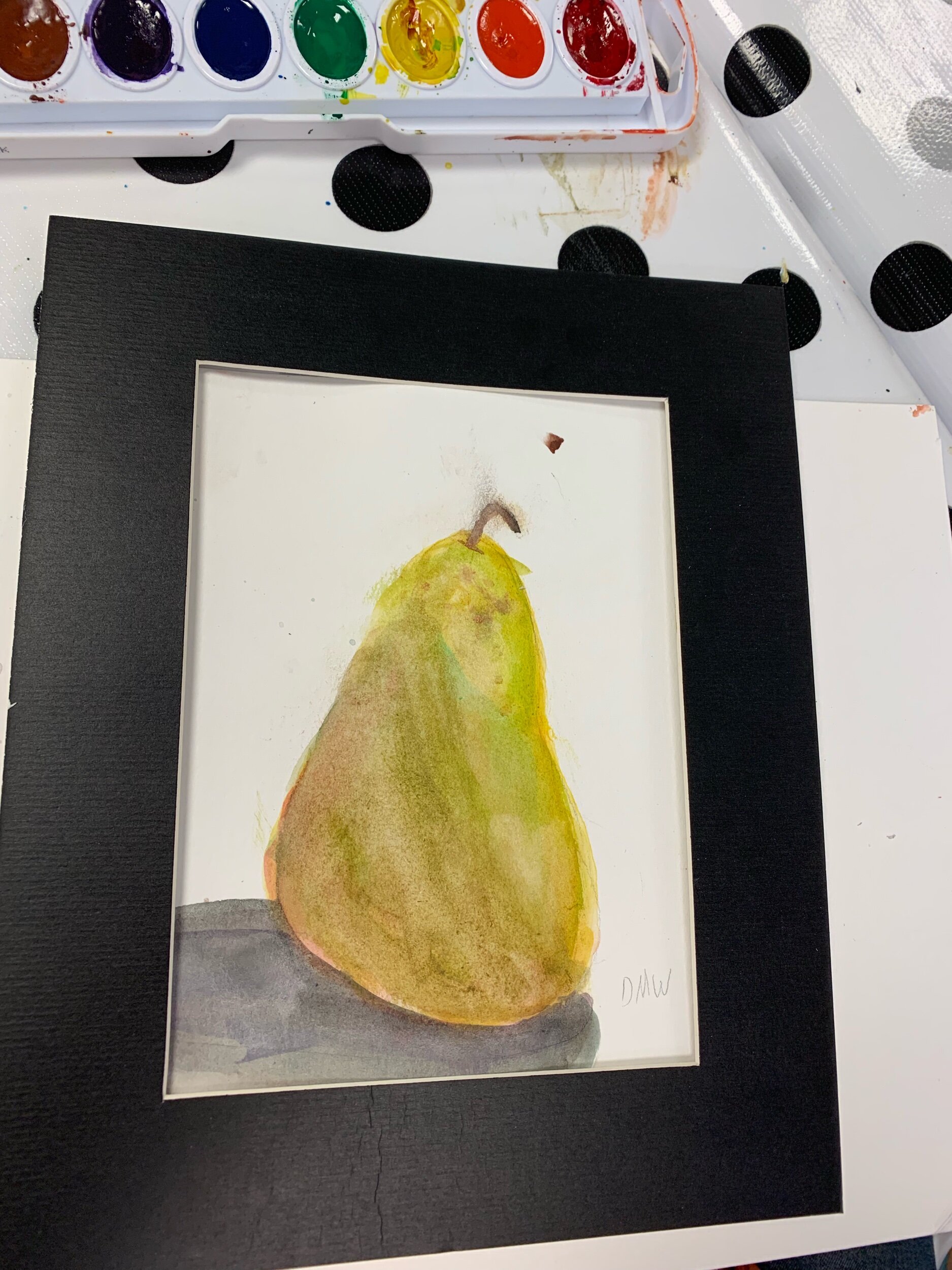
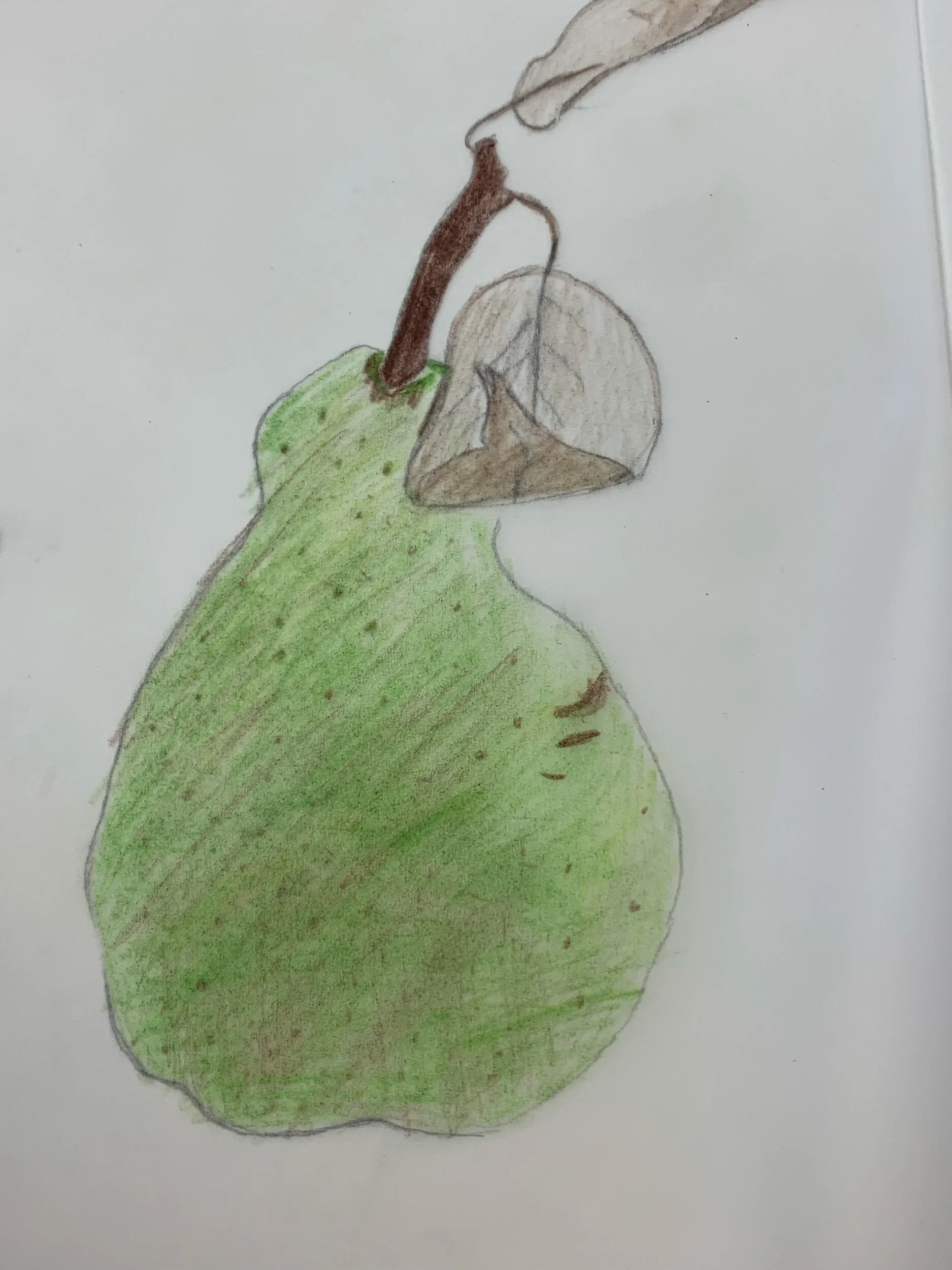
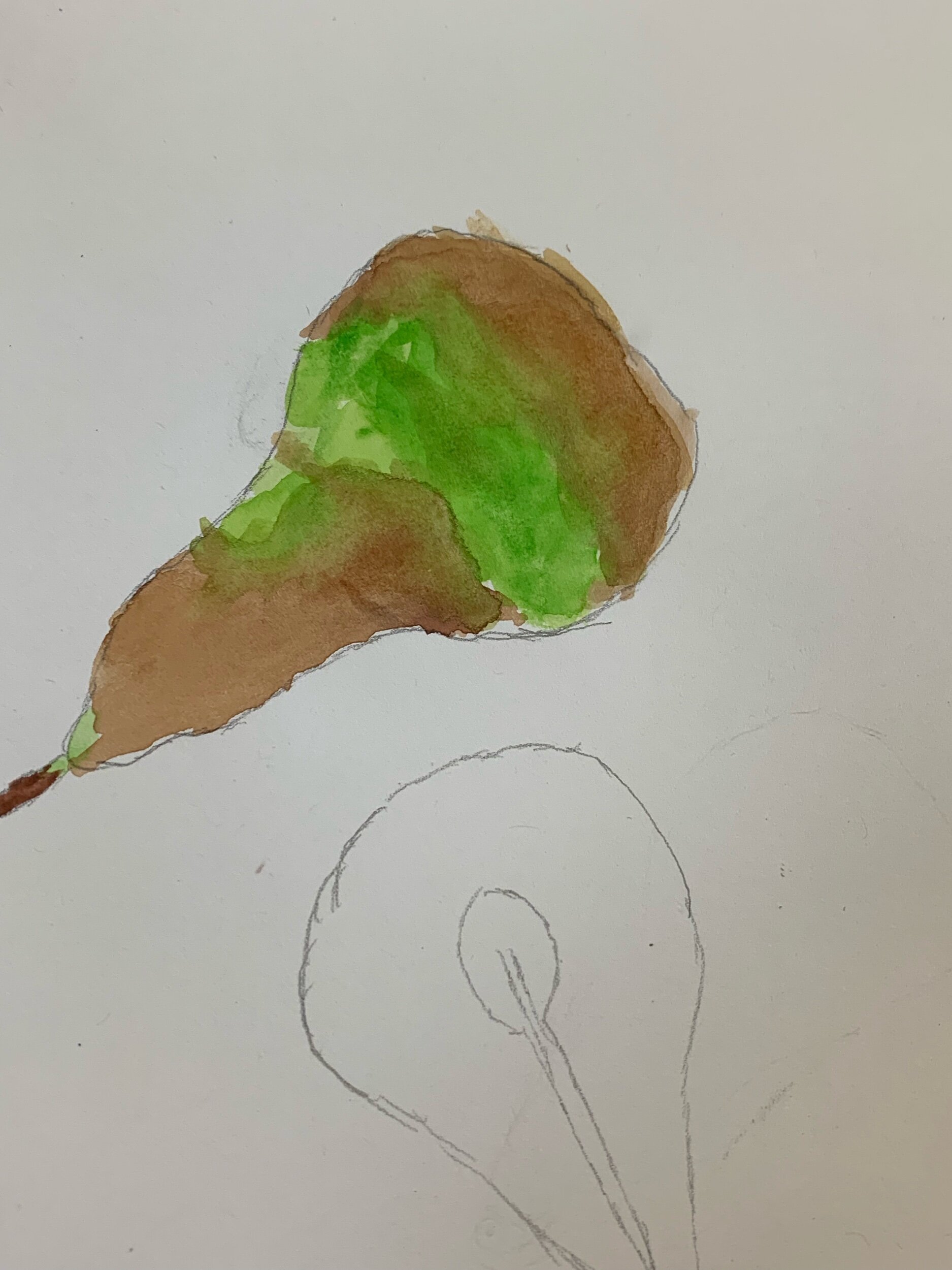
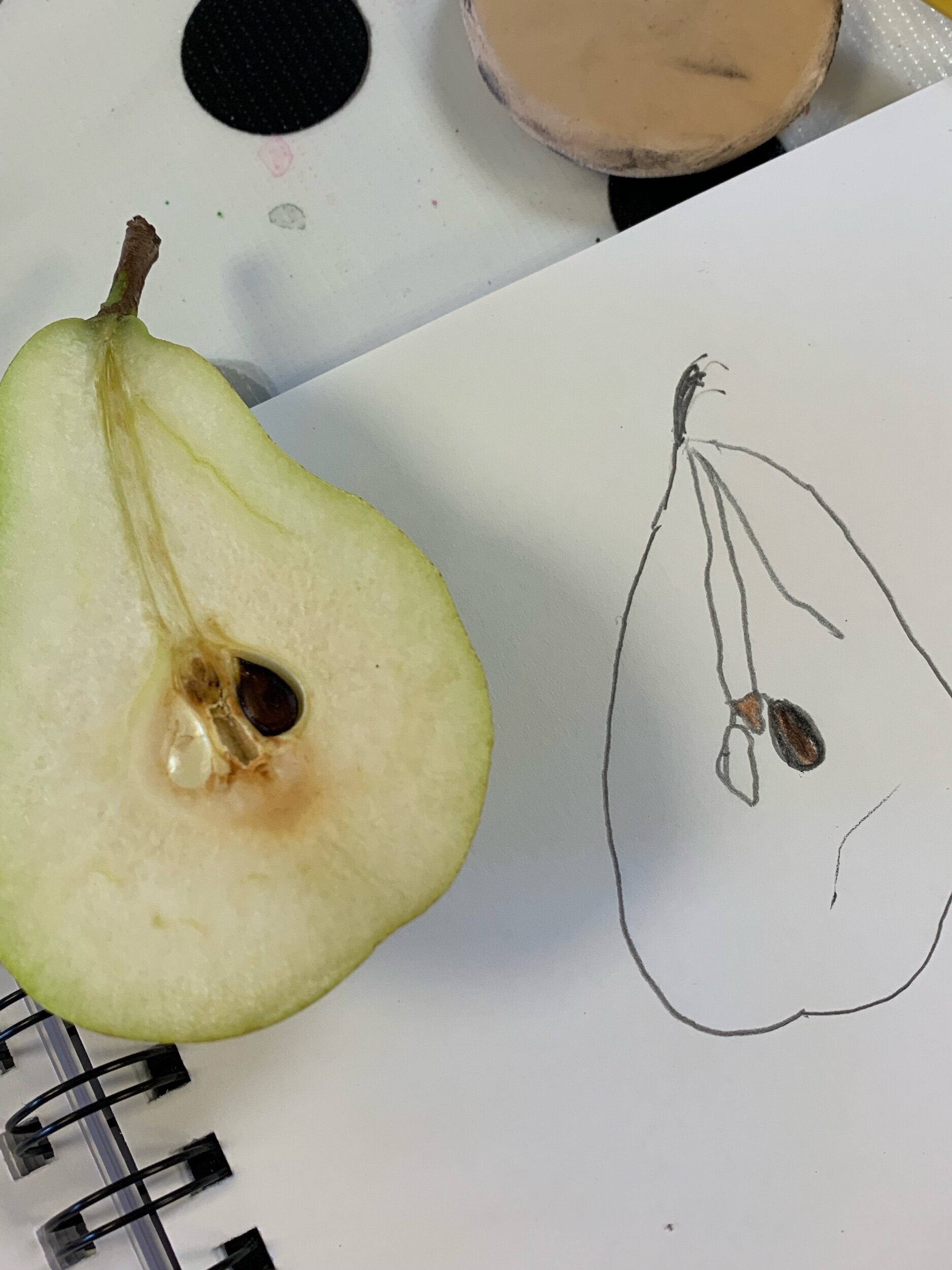
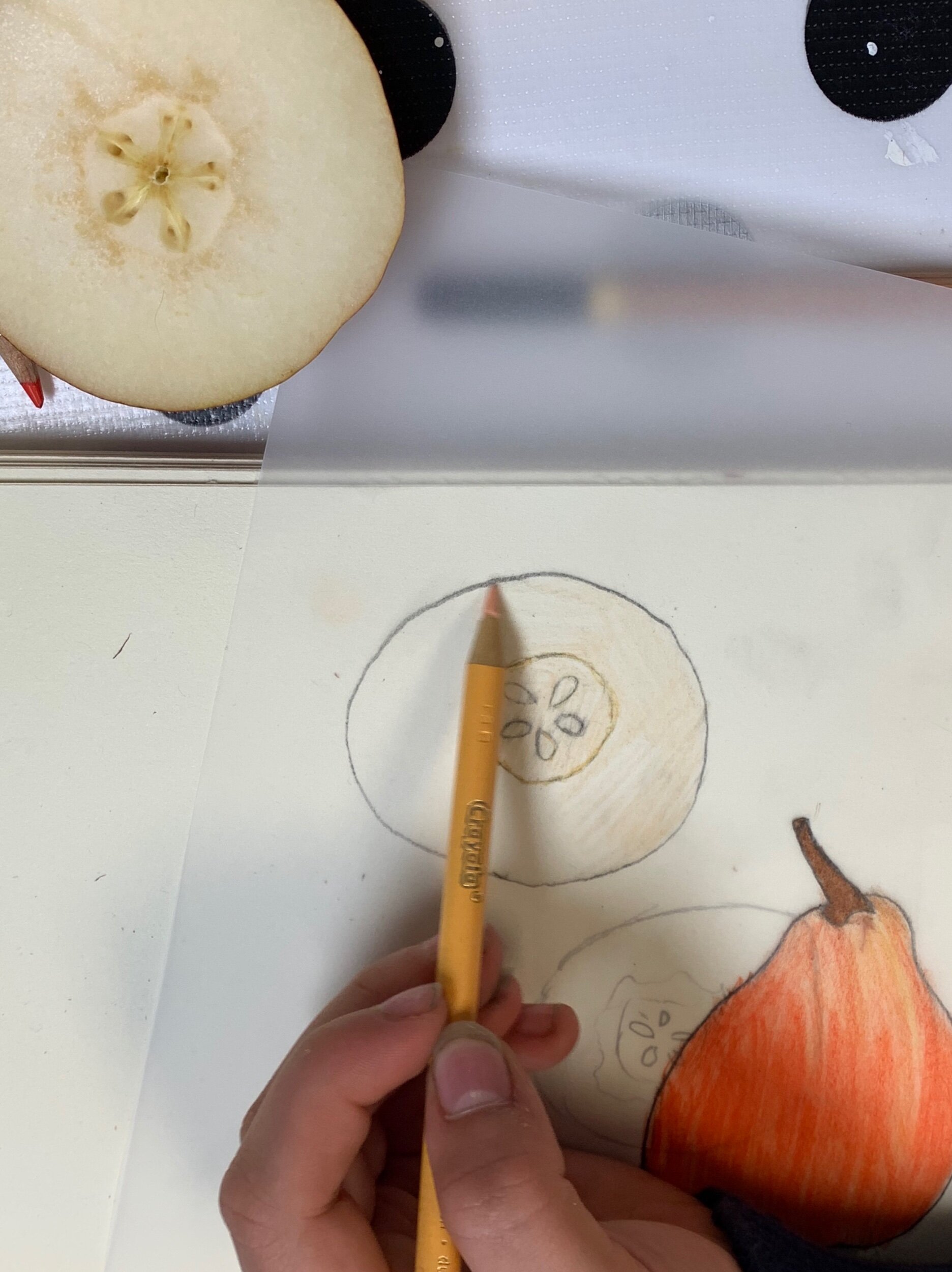
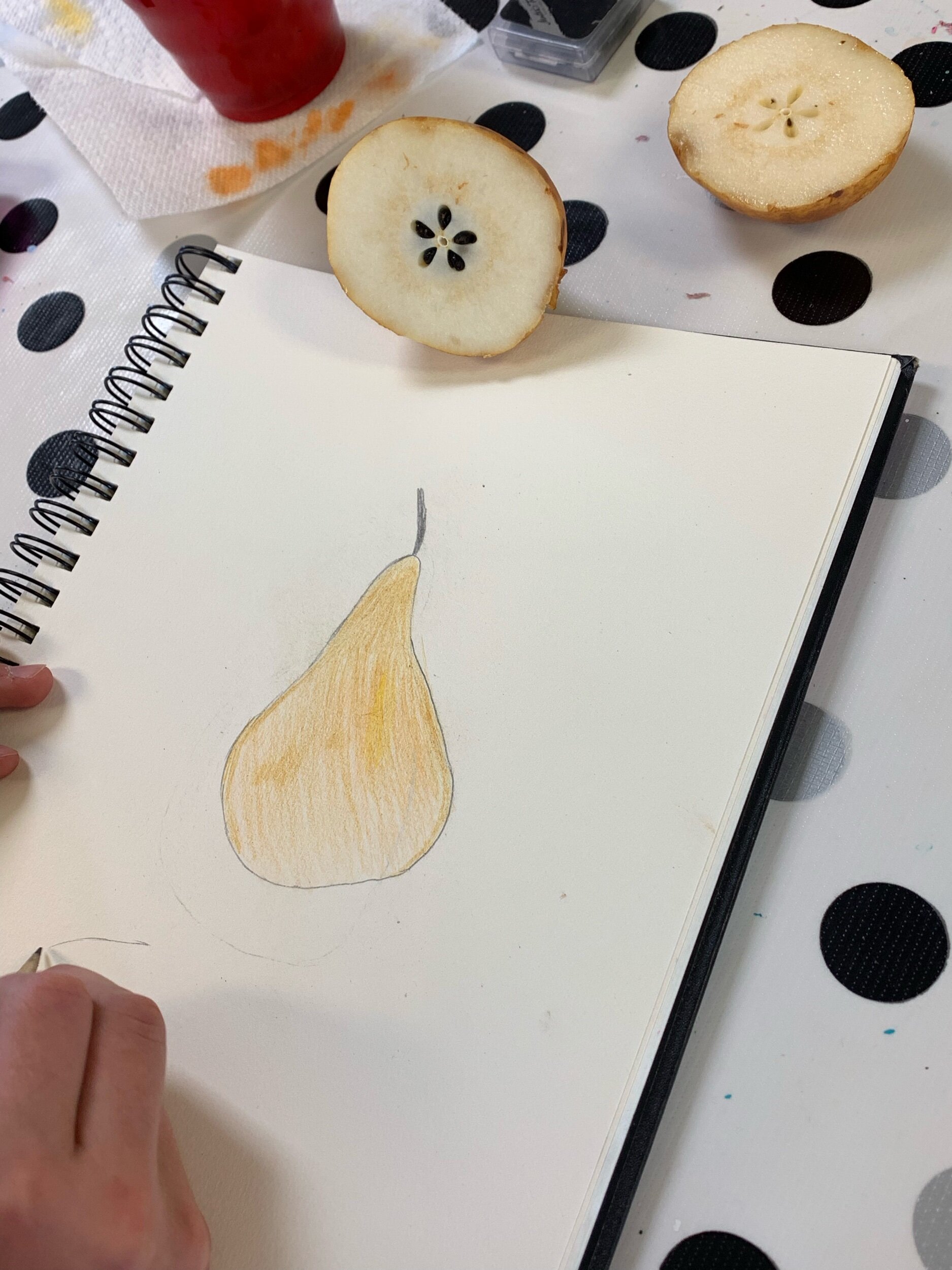
I am in love with the rendition of each pear.
I did a step-by-step demo and the unique personality of each artist shines.











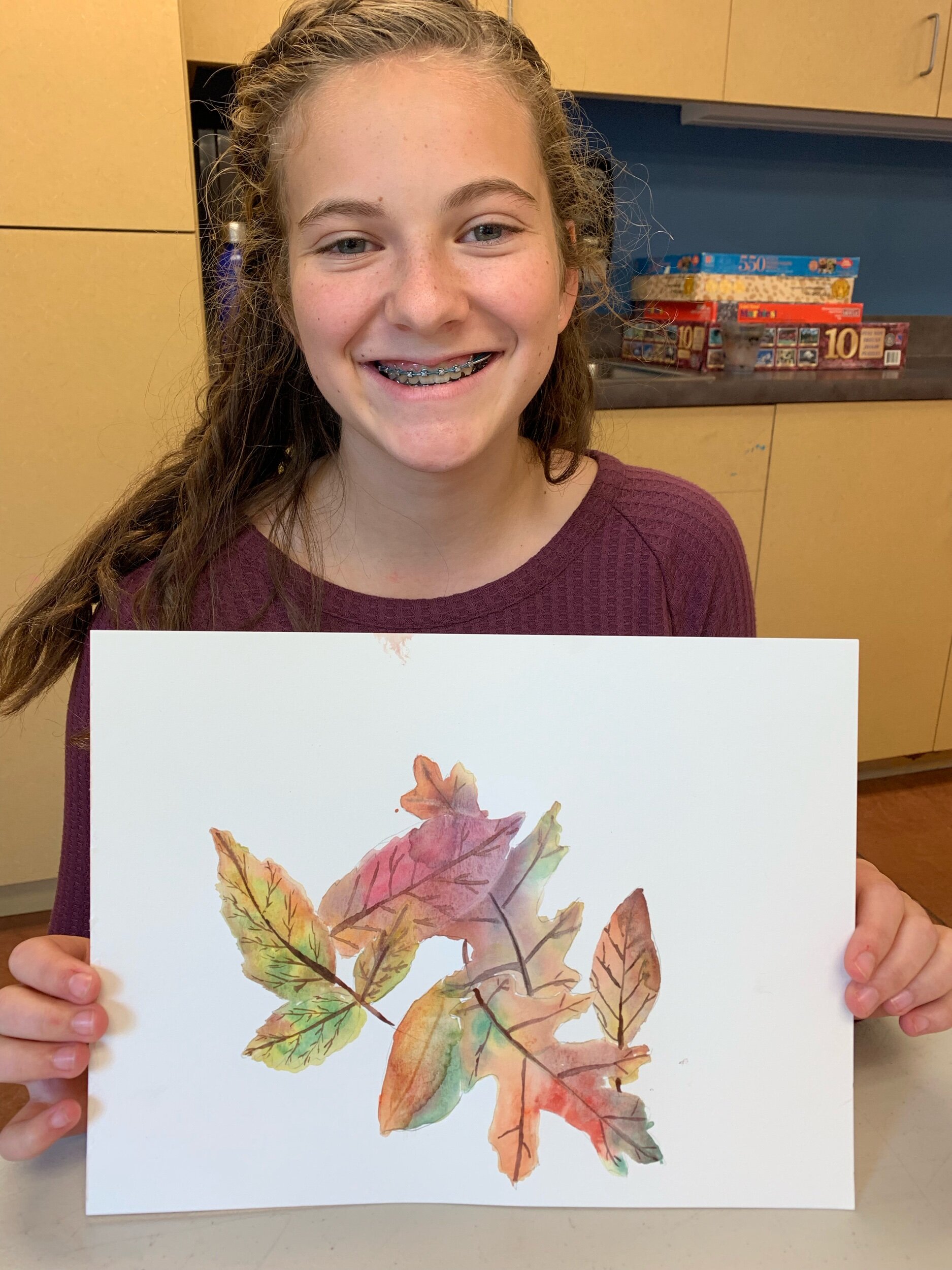
I wanted my students to realize some of the possibilities with colored pencils. If you are patient, it is possible to get deeper darker color. Patience also allows you to layer the colors for a more vibrant color. Leaves this time of year are too beautiful not to use.

Colored pencil leaf drawing

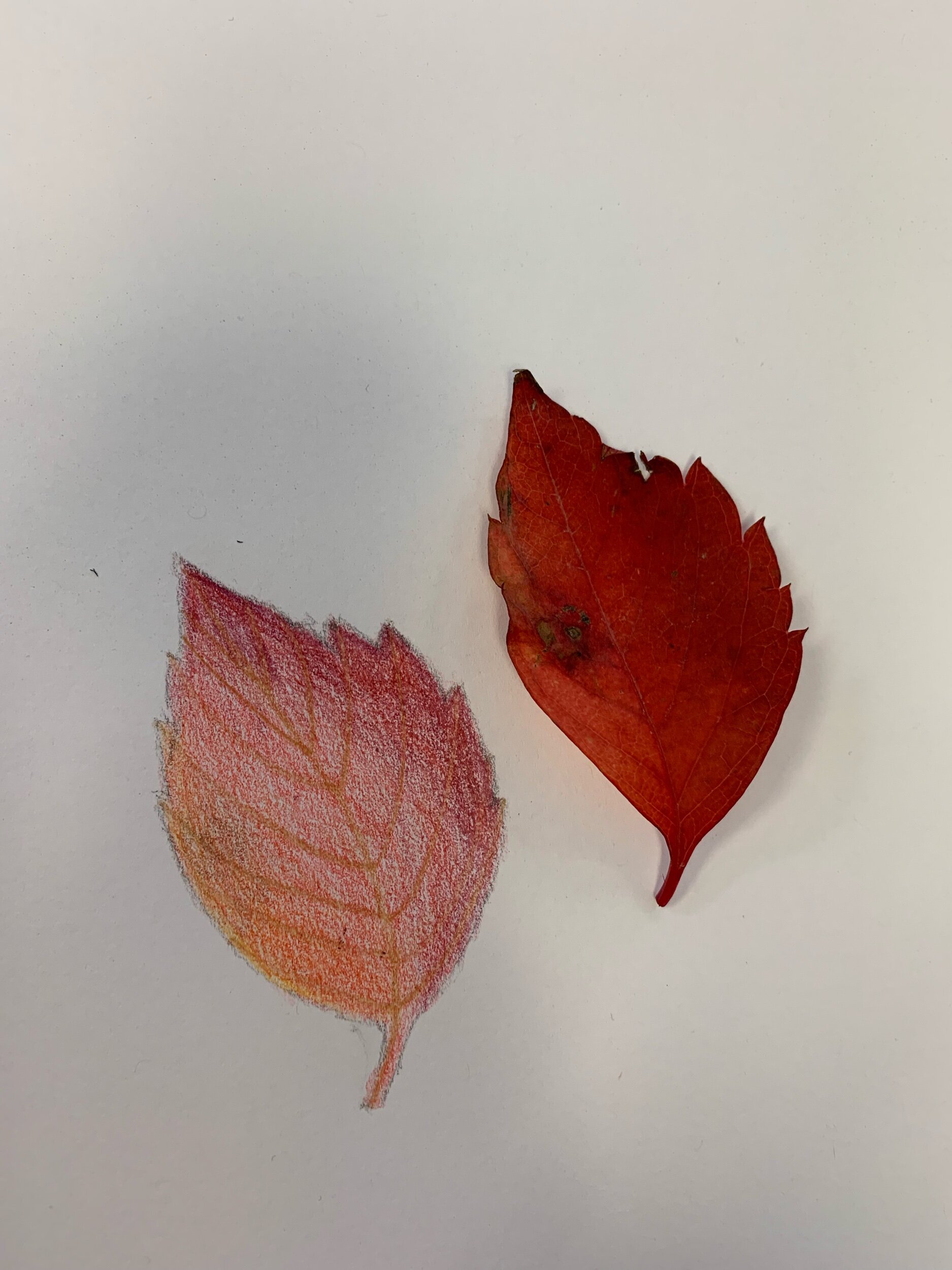

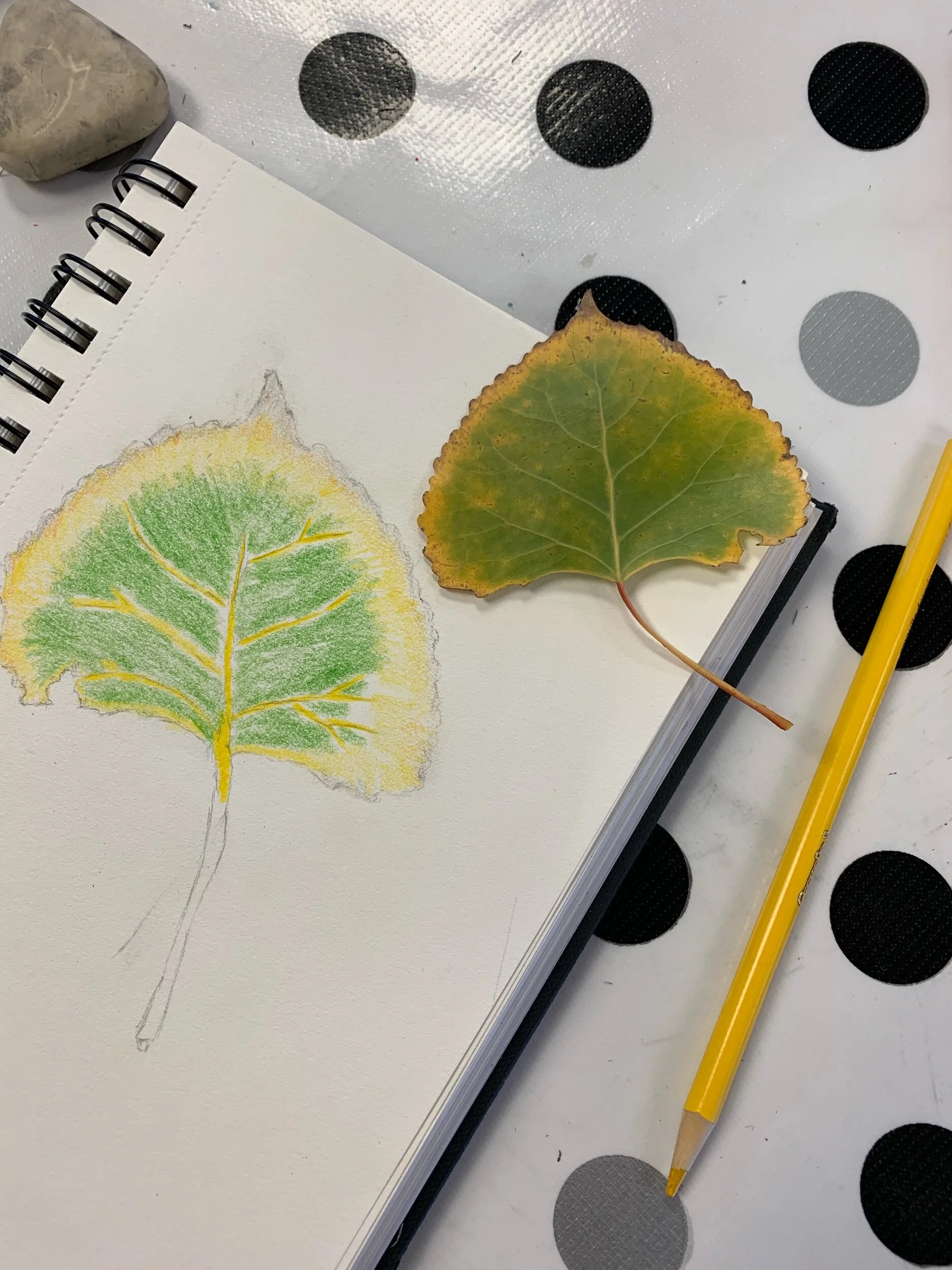

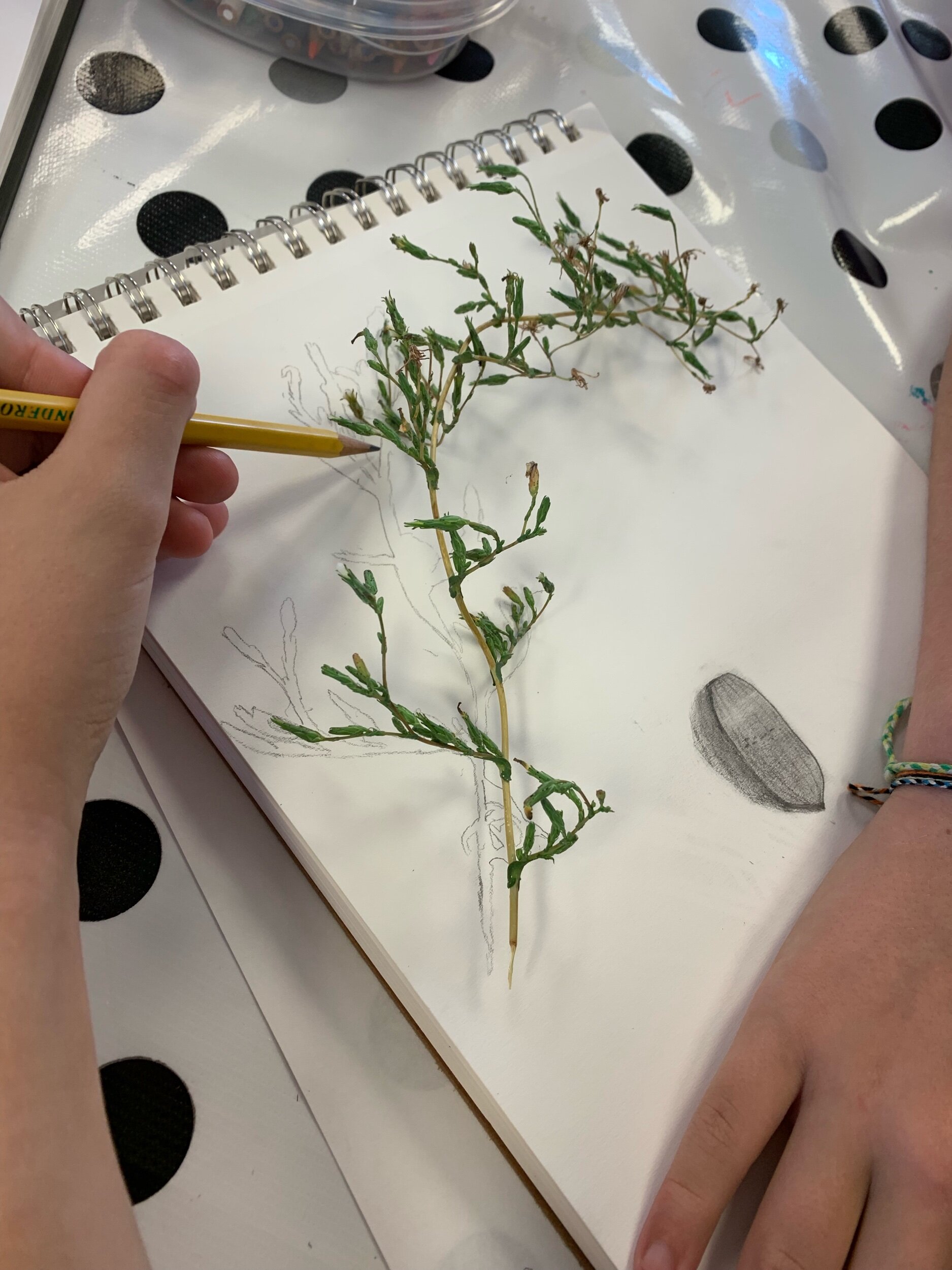
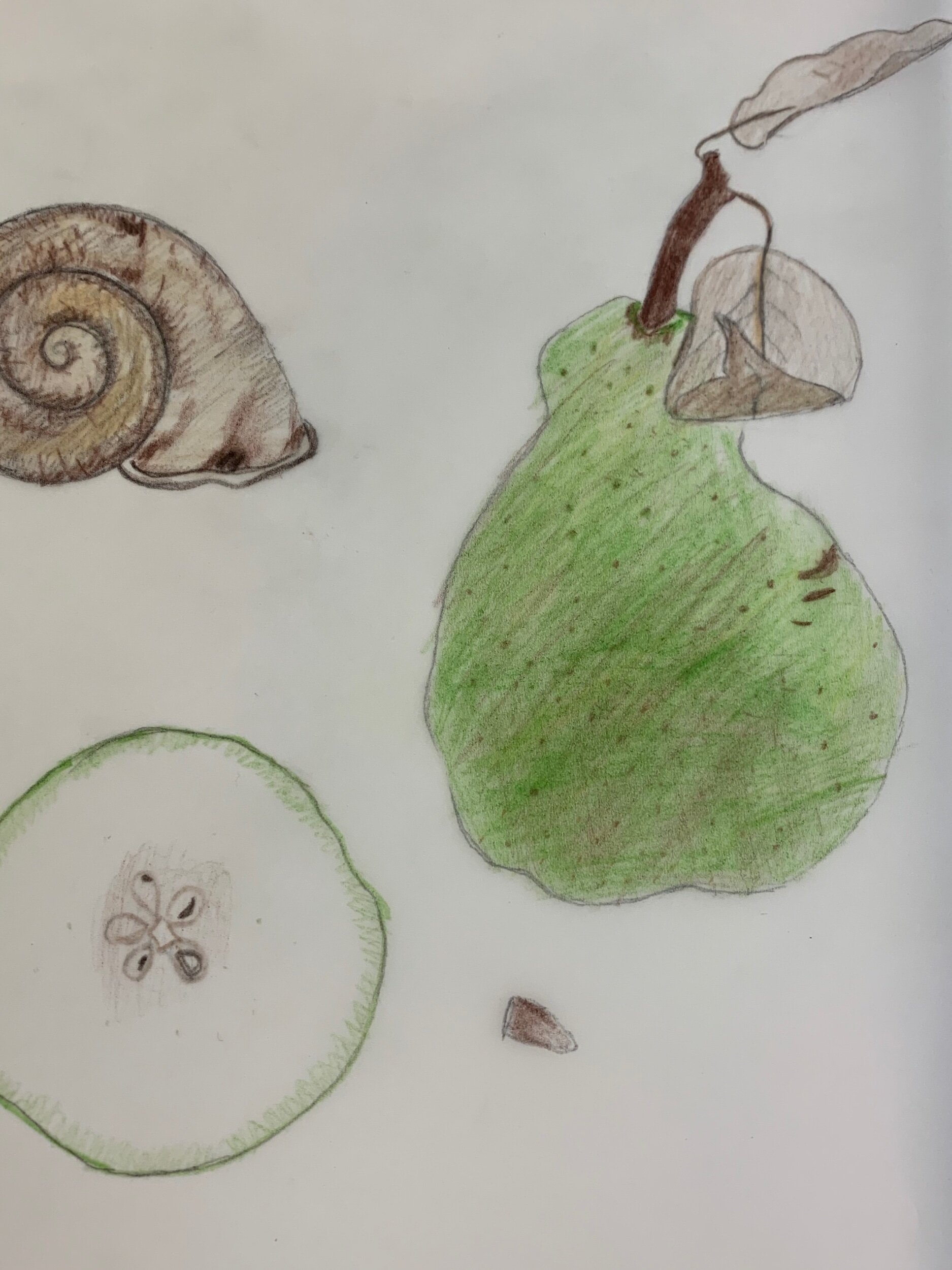
I wanted my art students to know that good art can be used for science. I gathered plant specimens from the Columbia River area to copy in detail.
I introduced them to vellum. Vellum comes from calves, goats or deer. Today vellum is still used by both miniaturists and botanical artists who are painting in a very precise way - typically working with 'dry' watercolour using a stippling technique or very small strokes. We used man-made vellum and I opted for colored pencils not wanting to deal with the crinkling, wrinkling of the paper when watercolor goes on too wet.










Is gathering honey an art? I don’t know but those bees create a masterpiece of honey comb perfectly shaped, perfectly filled.
The fact that bees all have a ready personal weapon makes you want to be sure you’re well covered and know what the heck you’re doing.
We didn’t so we proceeded with caution and amazement. In the end we had 20 pints.
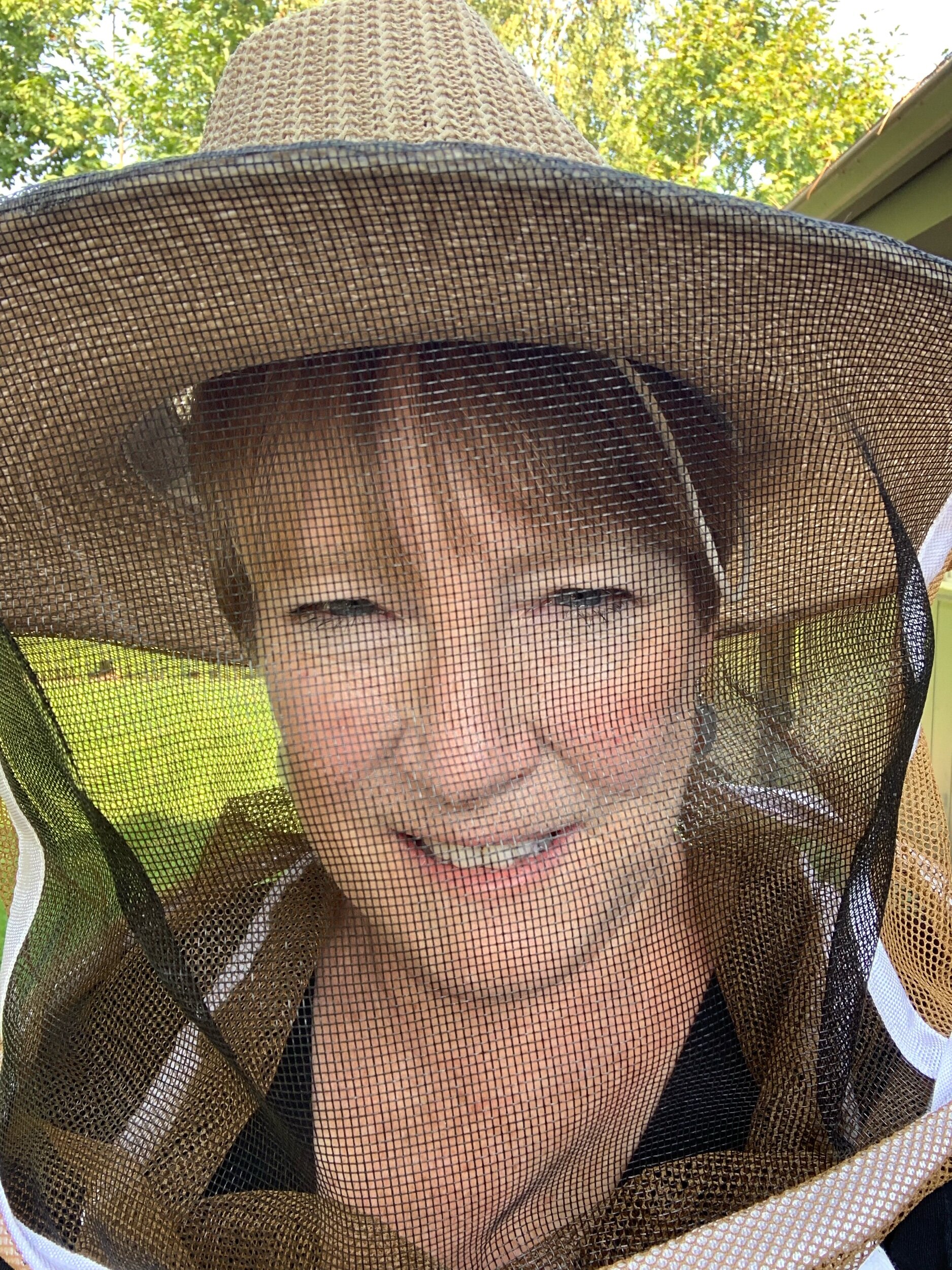

Beekeepers
Suited up

Exposed!
Cleary there’s been a lot of gathering honey

When you look at those perfect little building blocks for storing honey it’s a marvel
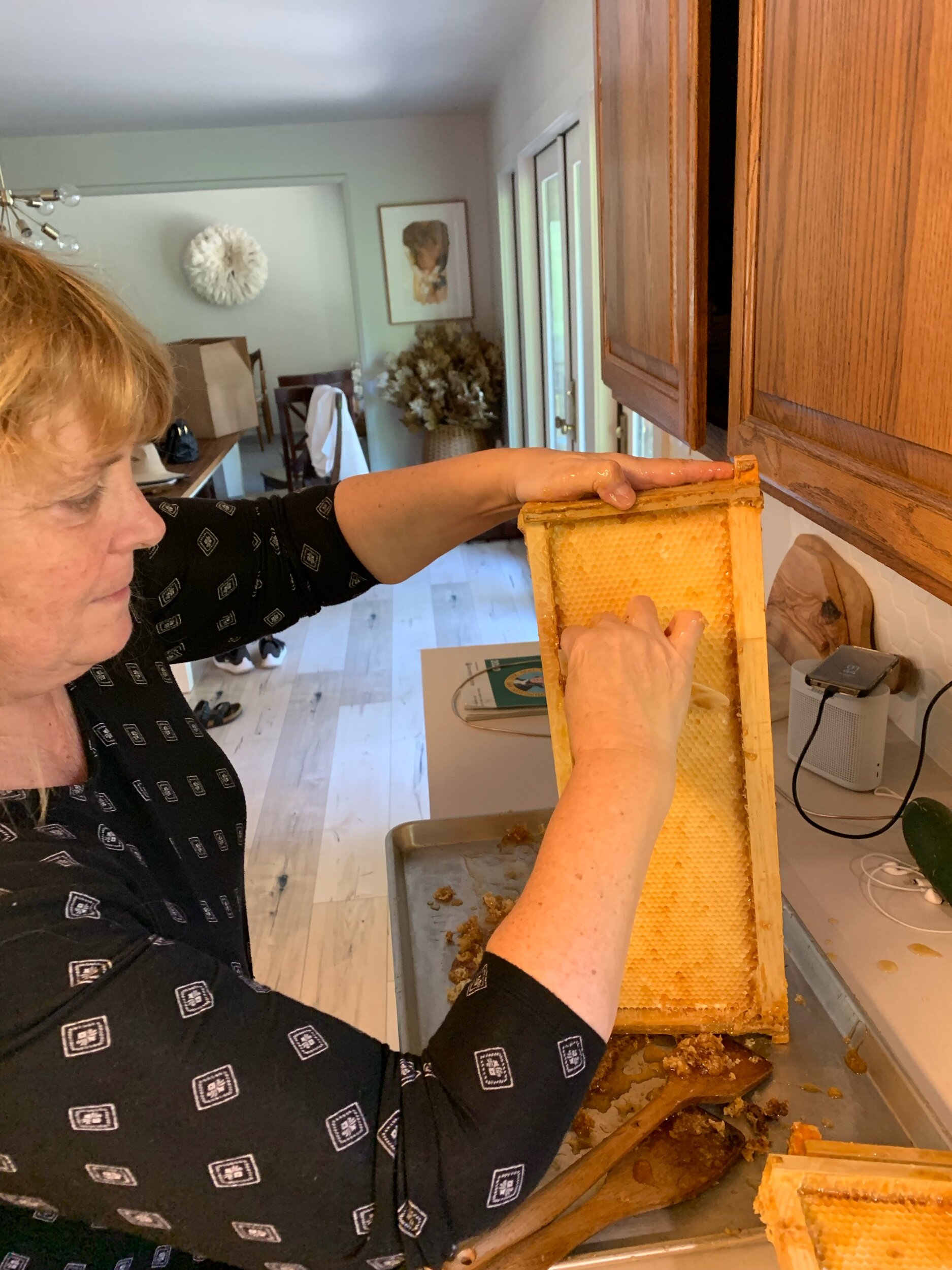
Without a spinner, we scrape and filter by hand


Every helper got their own jar of honey
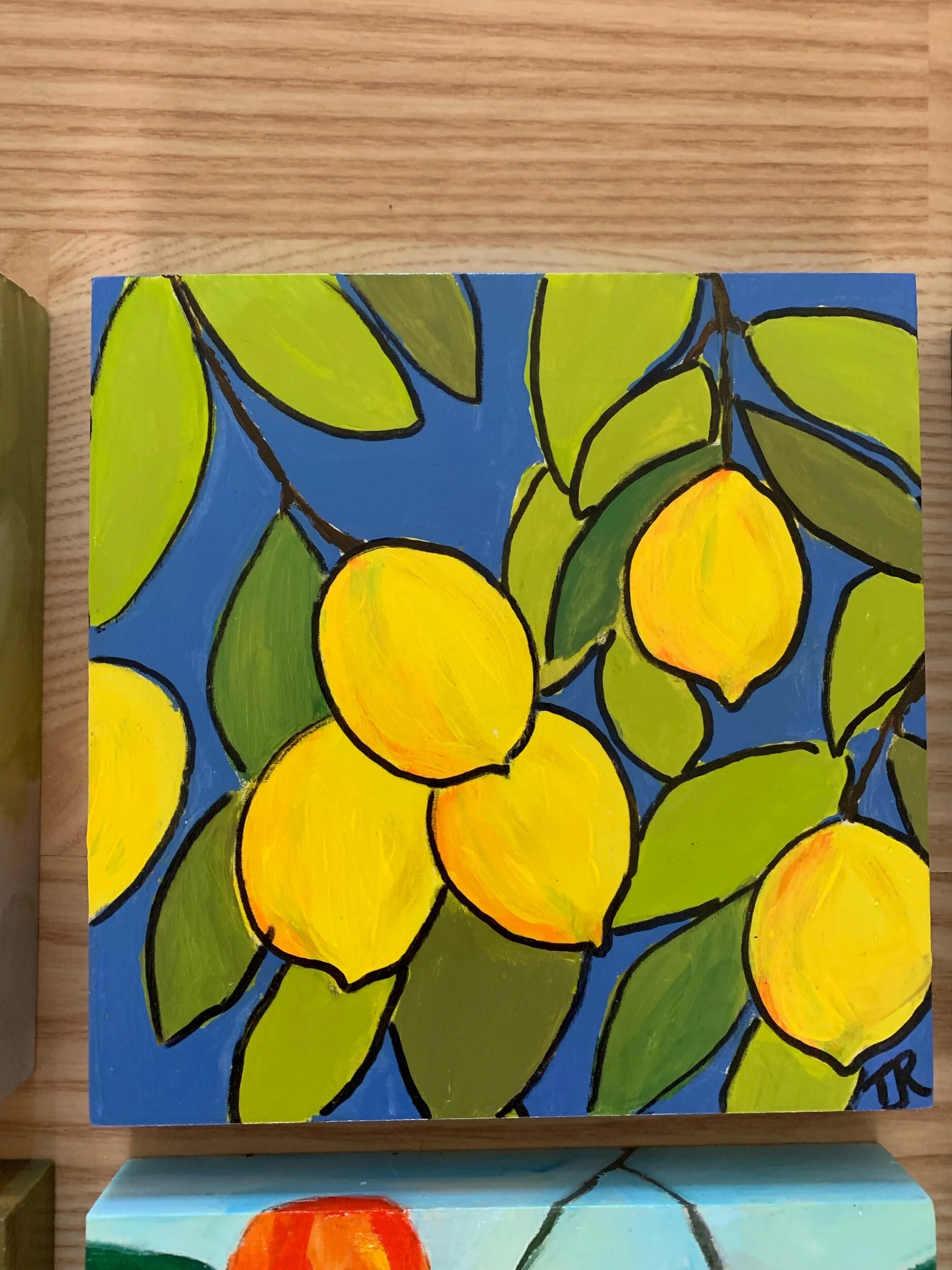
Who even knows in “These Trying Times” if ArtSquared will even happen come the end of September. ArtSquared is an annual event in Walla Walla, Washington. It is so popular with artists that even though signup is available for a week, the available slots are full the first part of the first day. Months before the event each artist is given (8) 6”X6” wooden panels; what the artist creates on this small panel is up to them. Every panel bought costs a mere $36. I decided to do a little bit of everything.

A pair of all my styles
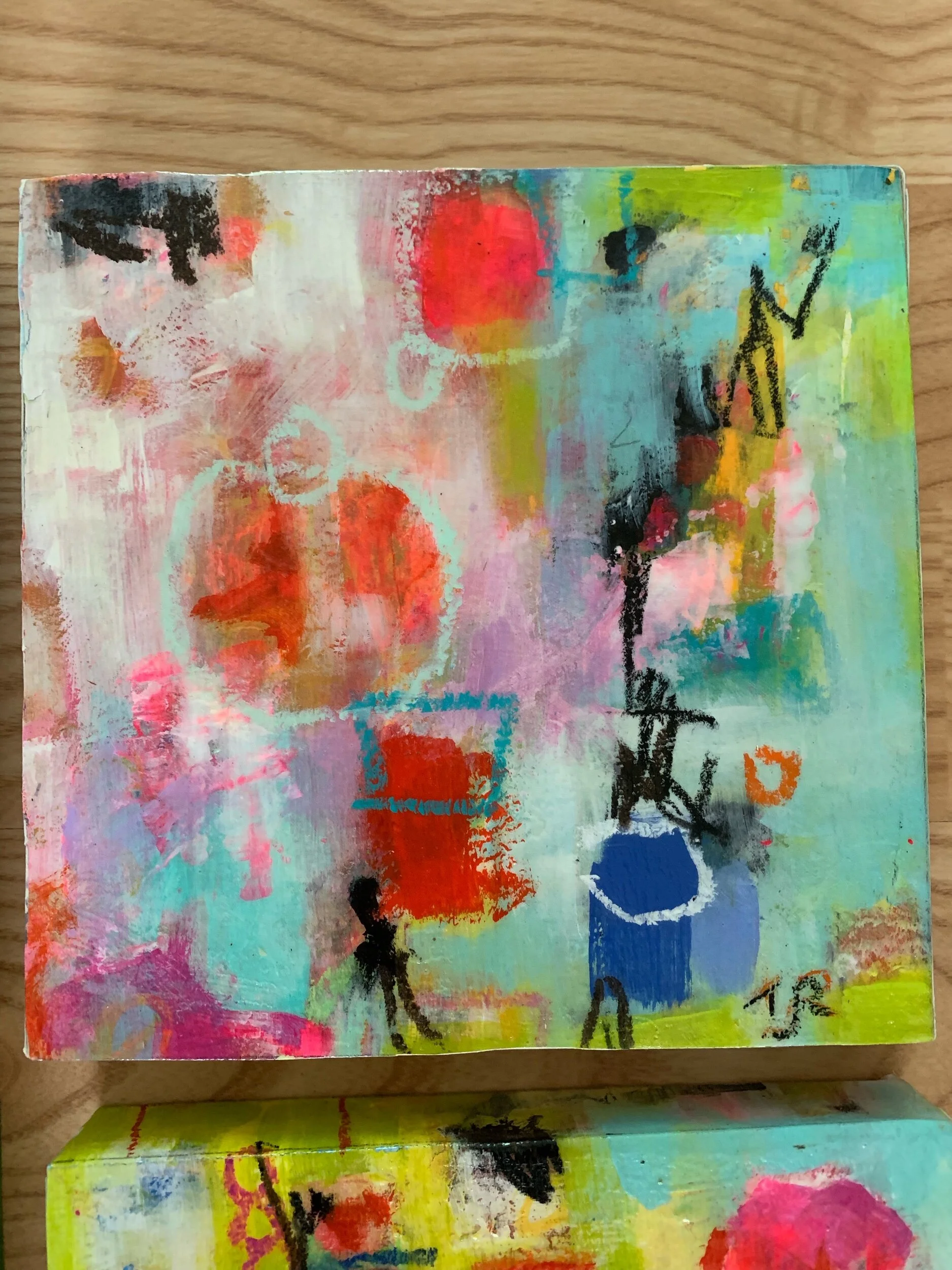
These are done on watercolor paper then adhered to the wood board


A little bit abstract



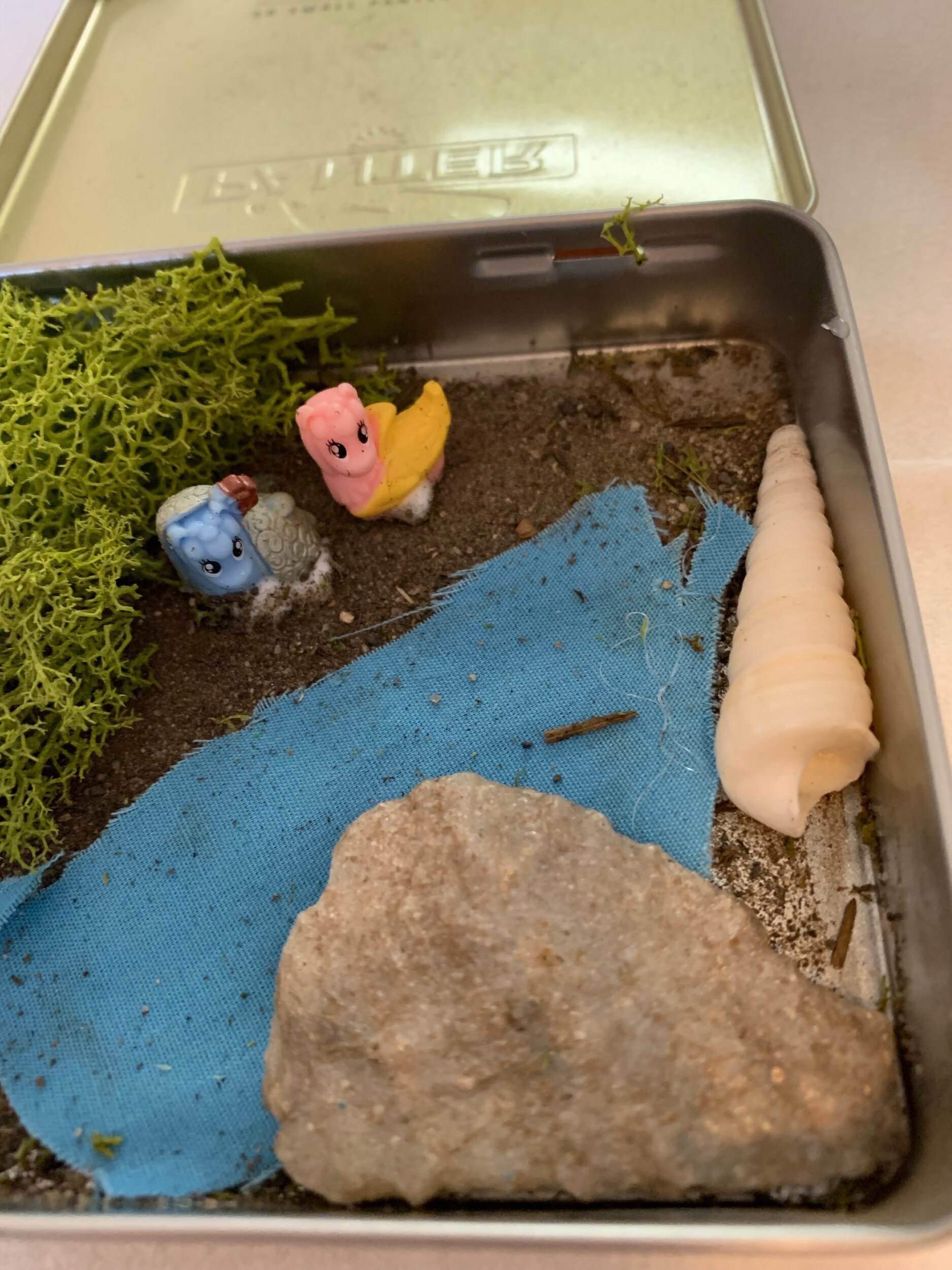
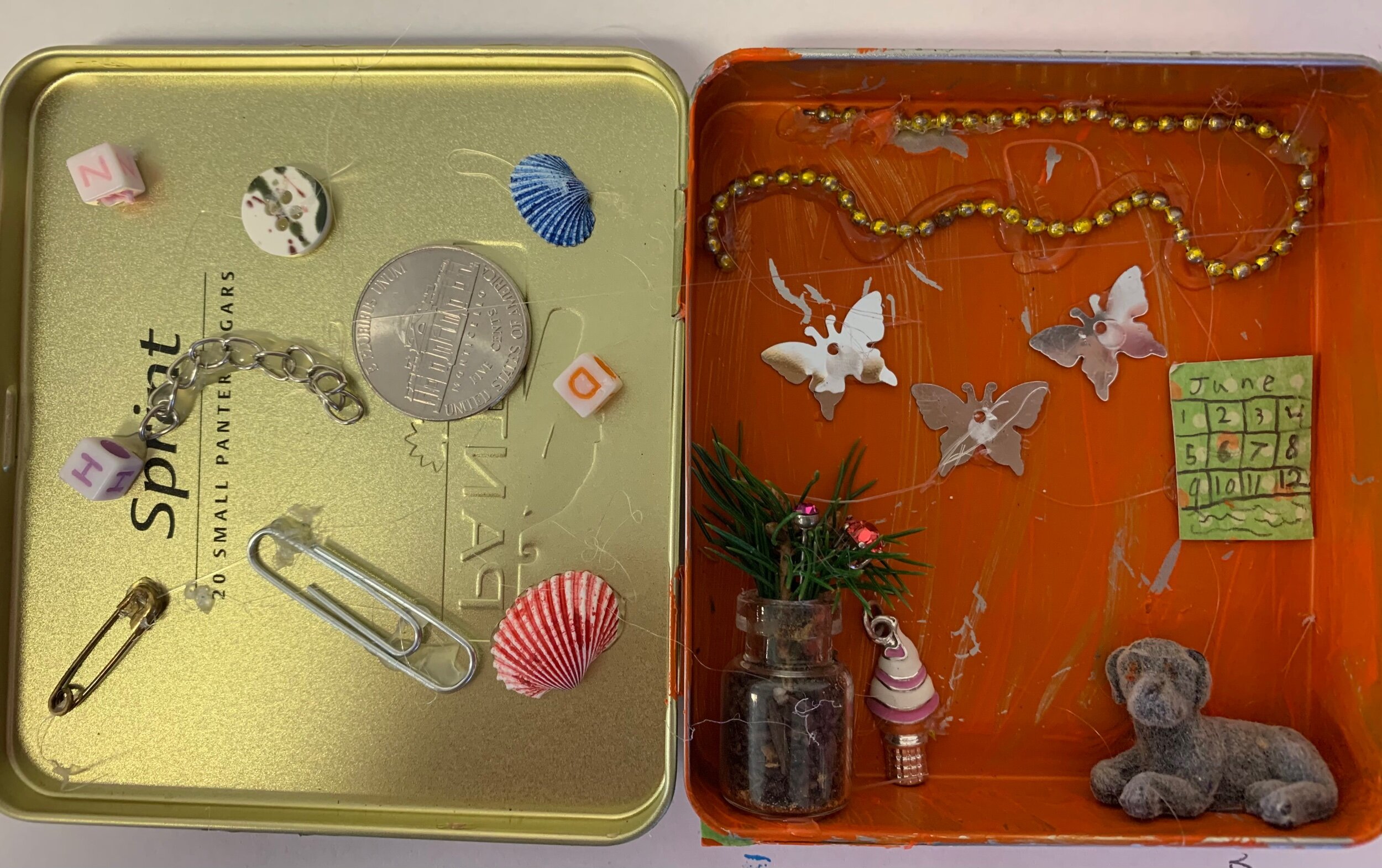
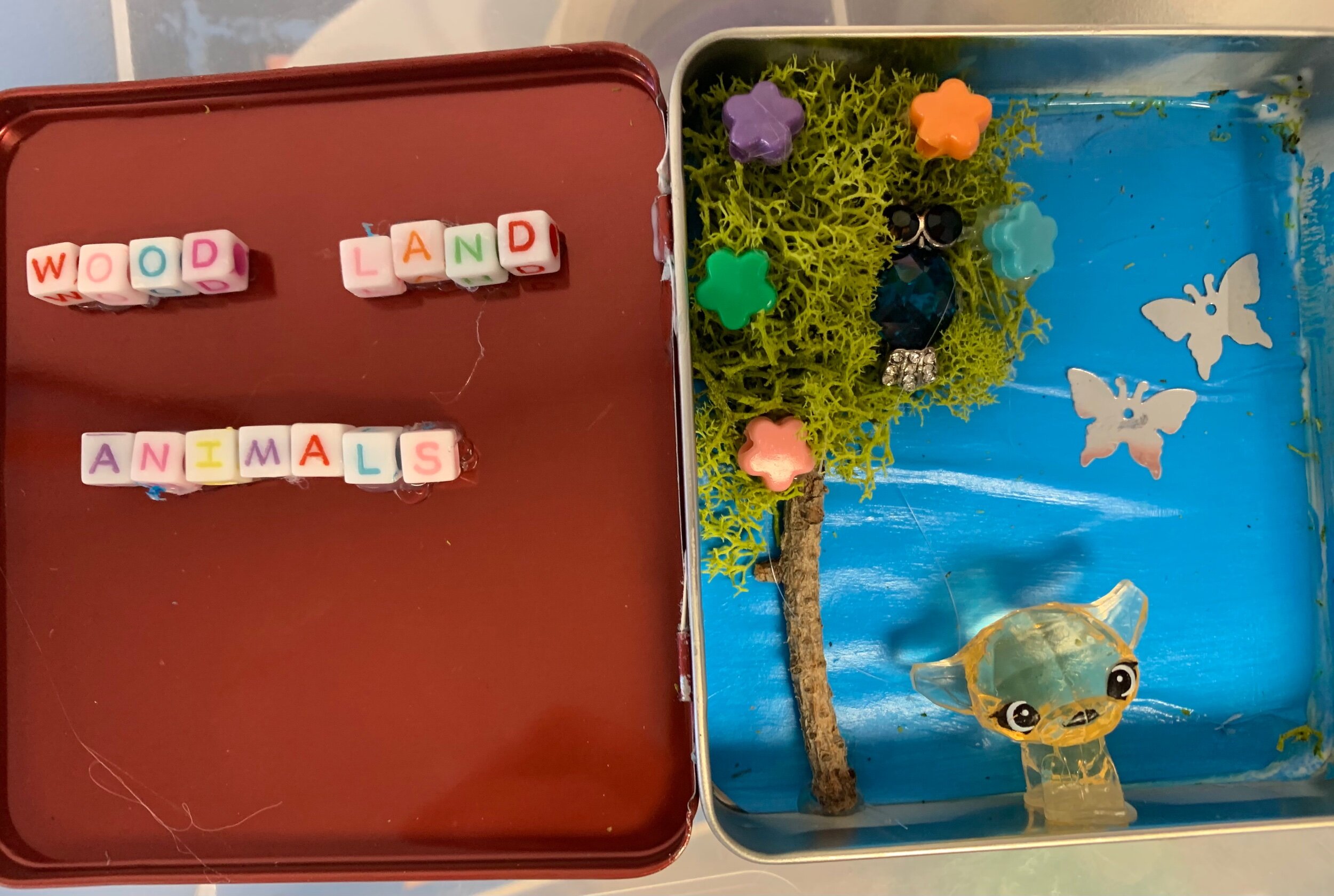
I was thrilled to discover Joseph Cornell’s clever boxes in the Chicago Art Institute. I’d poured over pages in books with his clever work and suddenly there it really was!
With a cue from him, my art students created their own whimsical boxes.


Diner


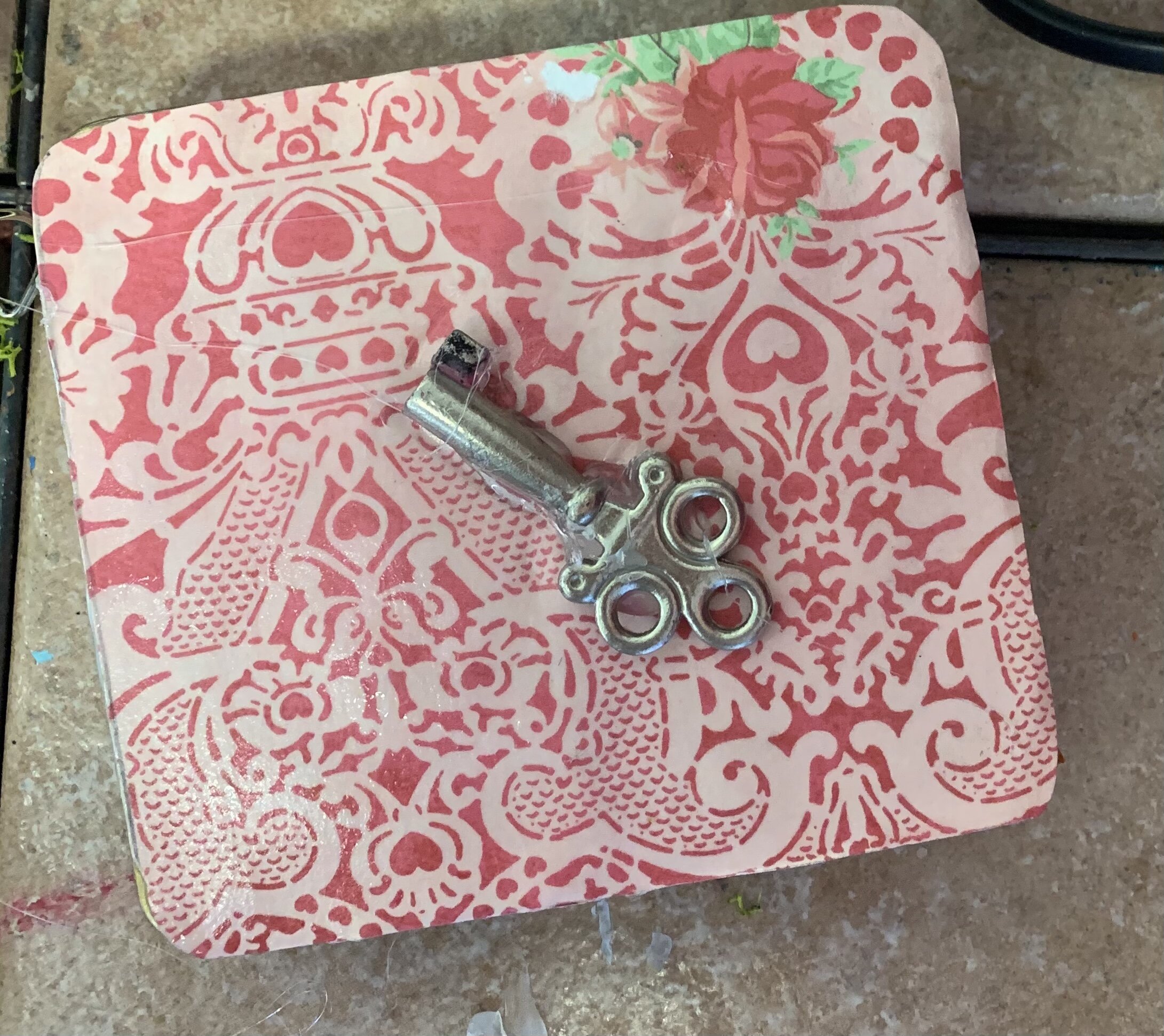
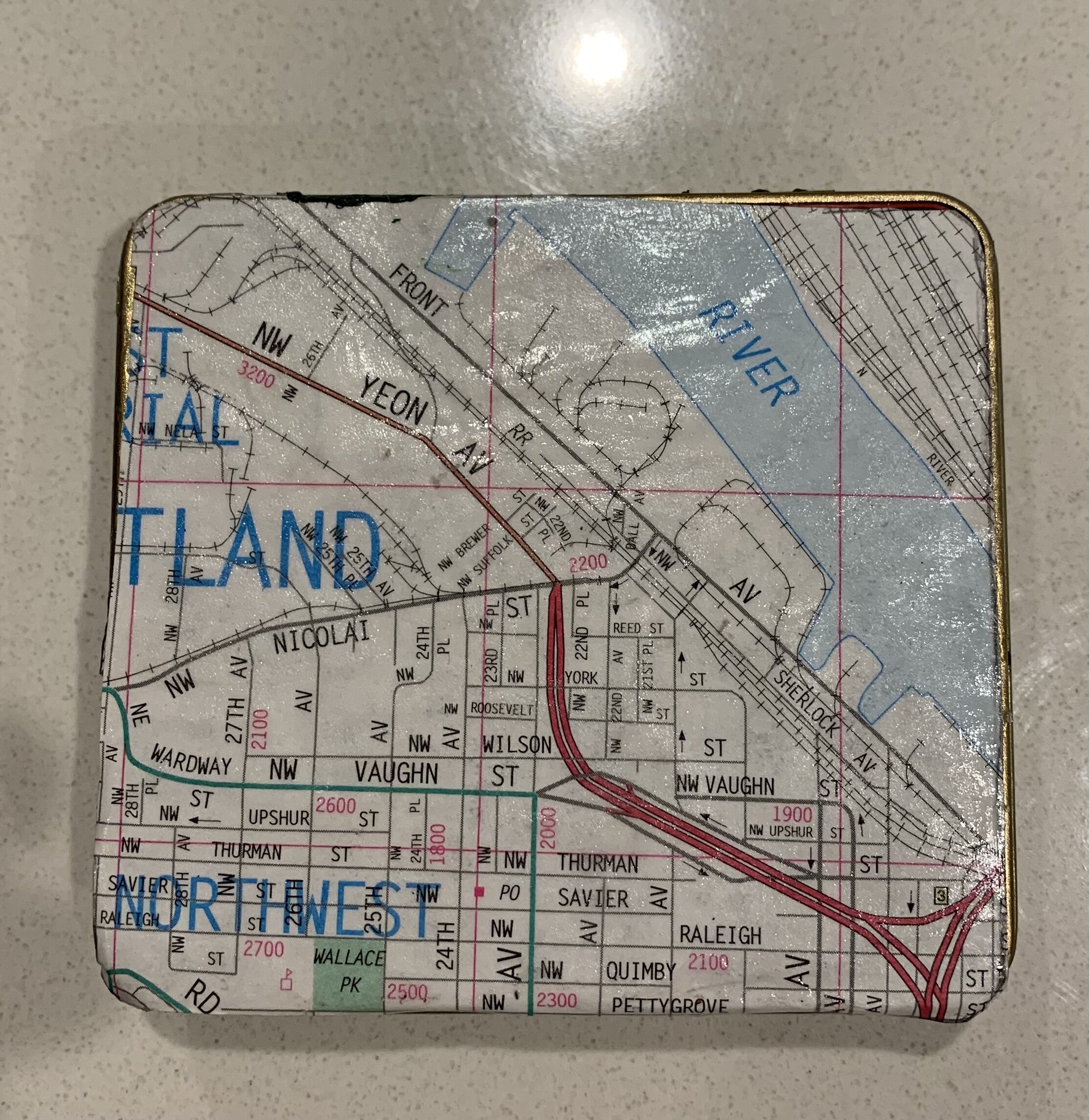
I bought a big pot of Gerbera daisies for my art class to paint on canvas in acrylic. I actually think the class never even looked at the flowers. A class of girls, they had already perfected their own floral style long before this class and cavalierly set about penciling in their design. No glance at the leaf shape, no interest in the leaf veining, the tiny hairlike flower filaments in the center, just full speed ahead.
I insisted that the whole canvas needed to be filled.
I’ve started painting in watercolor again so I did a quick one.


It was just good to have an art class with some creative people. The assignment was hills painted in strips and shapes and not realistically. They could use bold colors or mimic the colors of a real mountain.

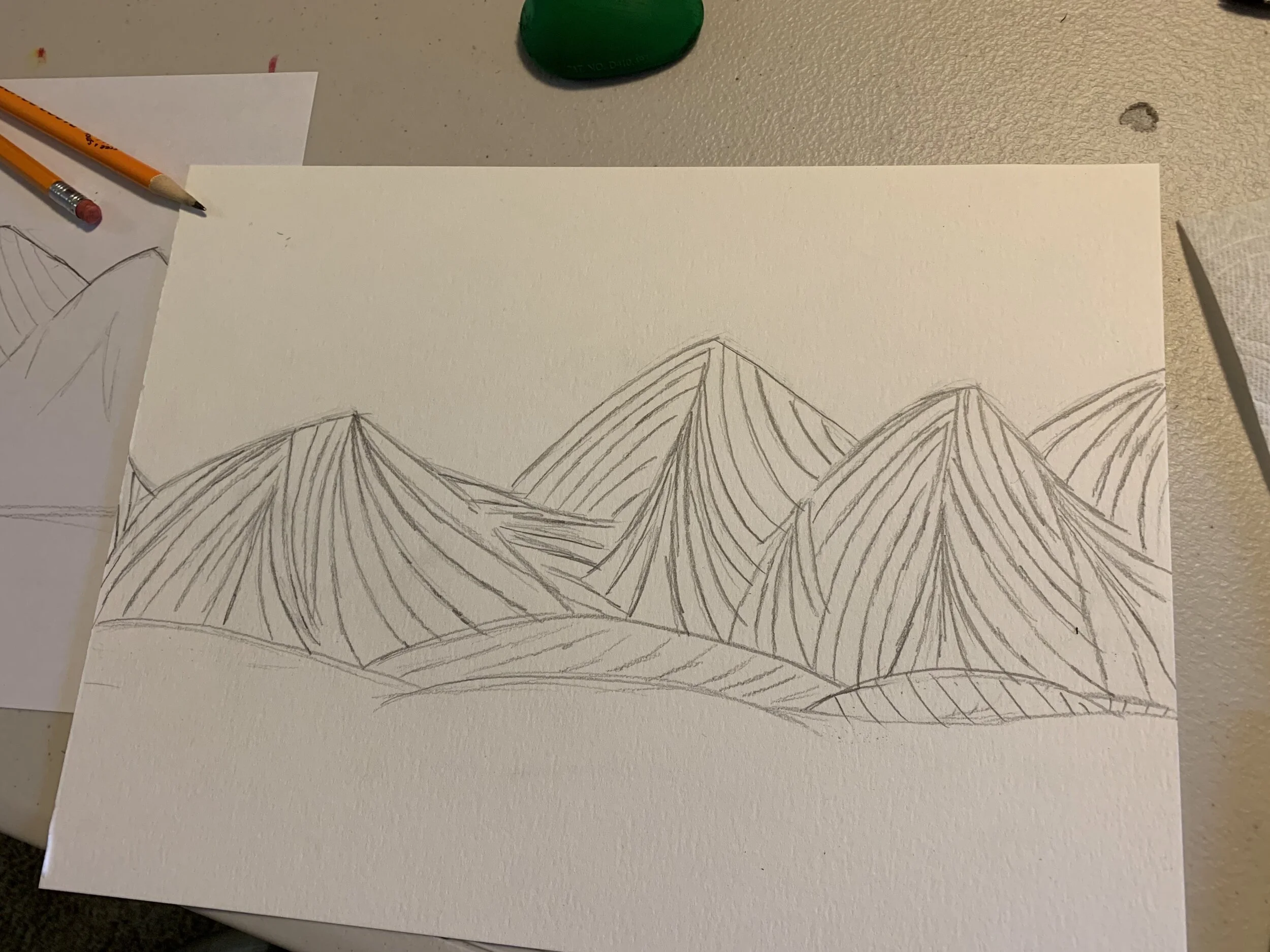

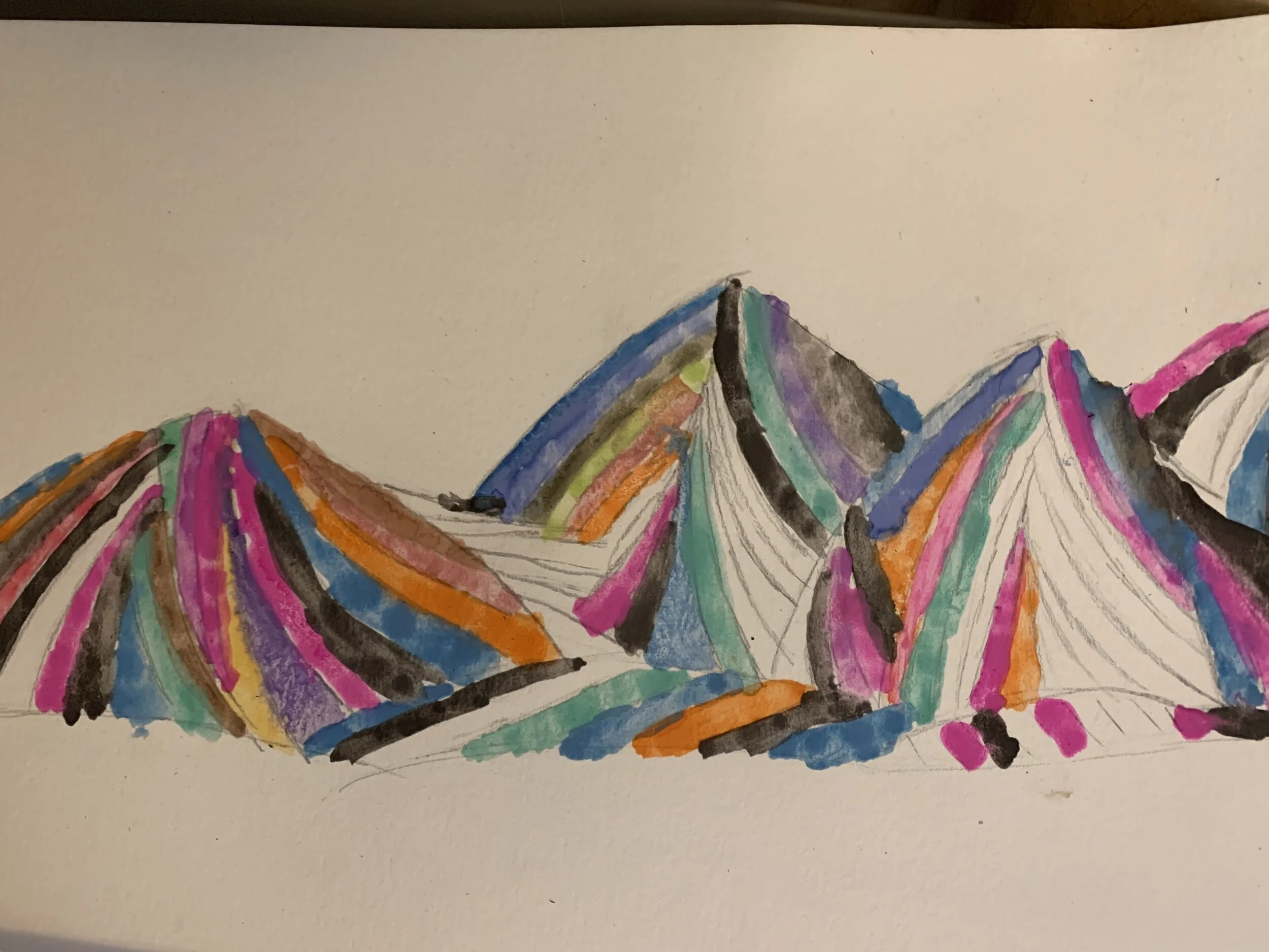
My sister is the real artist here. And she has the patience to really create gorgeous pieces.
There are sites where you can buy the amazing dyes that are so intense and vibrant; just search for “Pysanky egg supplies.” Really the supplies are reasonable and can last for a very long time.
You’ll need kistkas; the tool used for drawing your design with beeswax on the egg. They come in various tip sizes. Also, bees wax is the only kind of wax to use. And of course the beautiful dyes. Also , eggs are needed. You can buy hollowed out ready to use eggs from all manner of fowl: chicken, duck, ostrich. And a candle. We used little tea lights; they are squat and personal size.

You need to use beeswax for this and the kitstkas come in various sizes
Beeswax
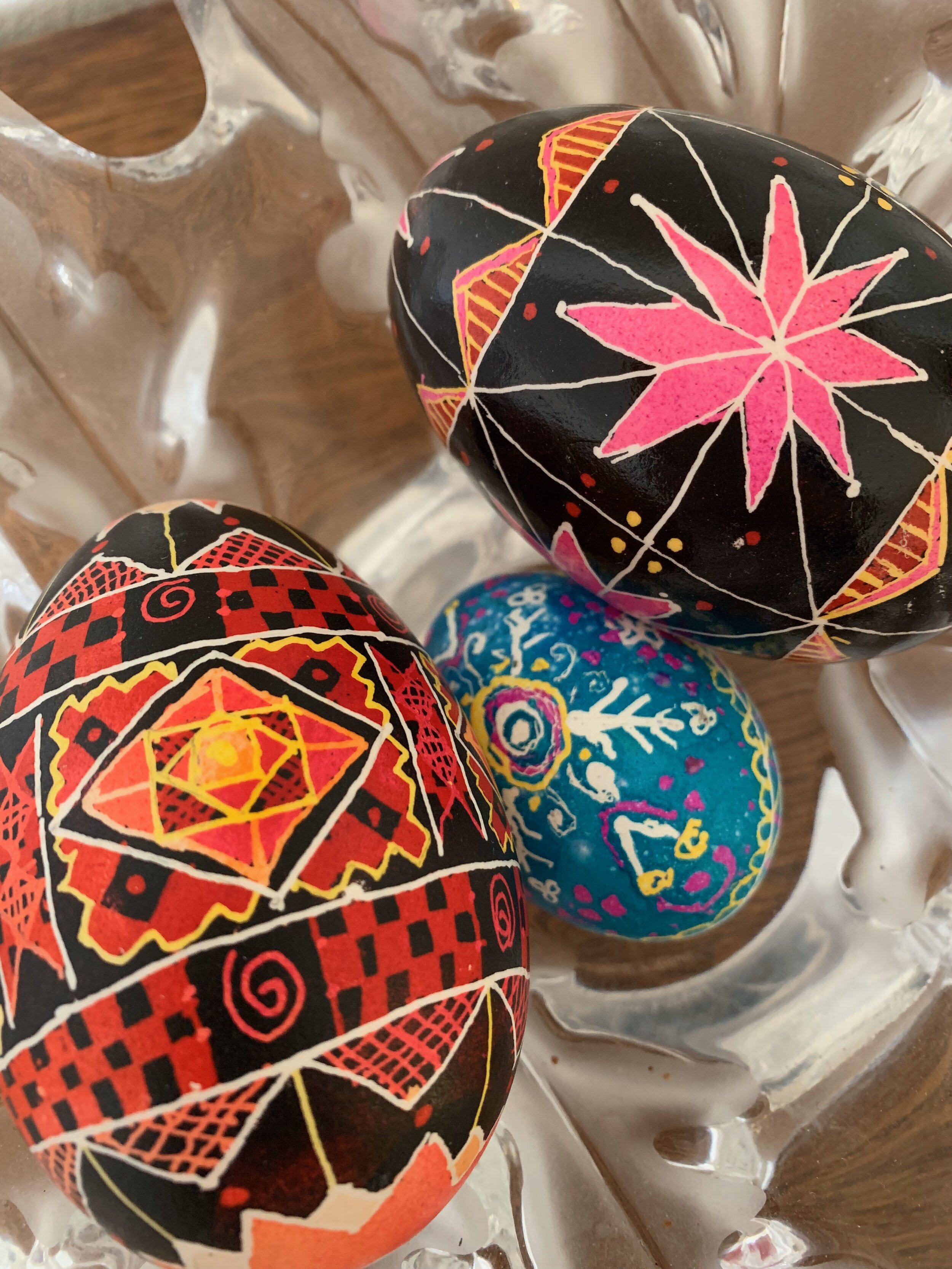
You can make up your own design or copy a traditional one
Design

A tiny hole is ideal to get the egg out or its shell
Eggs

First attempt ever at this craft
newbie

My class was so quiet as they became absorbed in the process
art therapy

Even the paper towels become their own work of art
Ink blots
I was happy to get into this juried show at the Josephy Center in Joseph, OR. In part because it was a show entitled:
And my art didn’t exactly reflect that at face value. But I am glad to be a woman and glad that I get to vote. I just feel like I don’t need to rise from anything.
It was a fun night starting with drinks and a delicious dessert at the Gold Room. And then to the show where I got to meet my grandsons’ pottery teacher and other local artists and patrons.




I laid eyes on this perfect little bird my grandson, Rhys, made in his pottery class. I loved the subtle color choice he made; I loved the earnestness of the bird, I loved the heft of it and the shiny feel of it.
He told me he had originally painted the bottom too but his teacher told him he had to scrape it off- it would explode if it were completely covered in glaze.
I told him I was obsessed with it and thought I probably needed to take it home with me. He said, “I was thinking of giving it to you.”
So it’s mine now.

I just love teaching art! This class was talented and fun to work with.
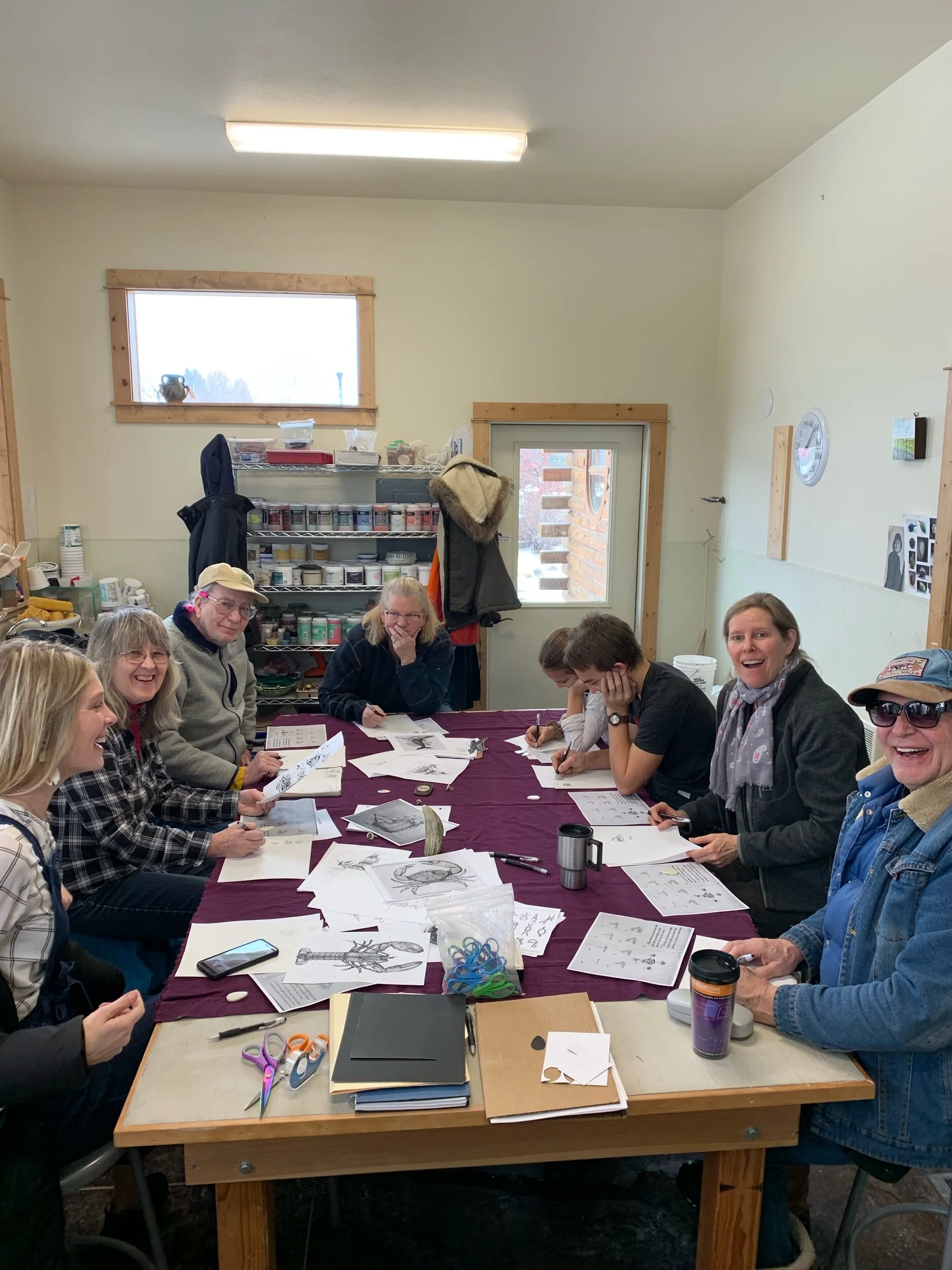
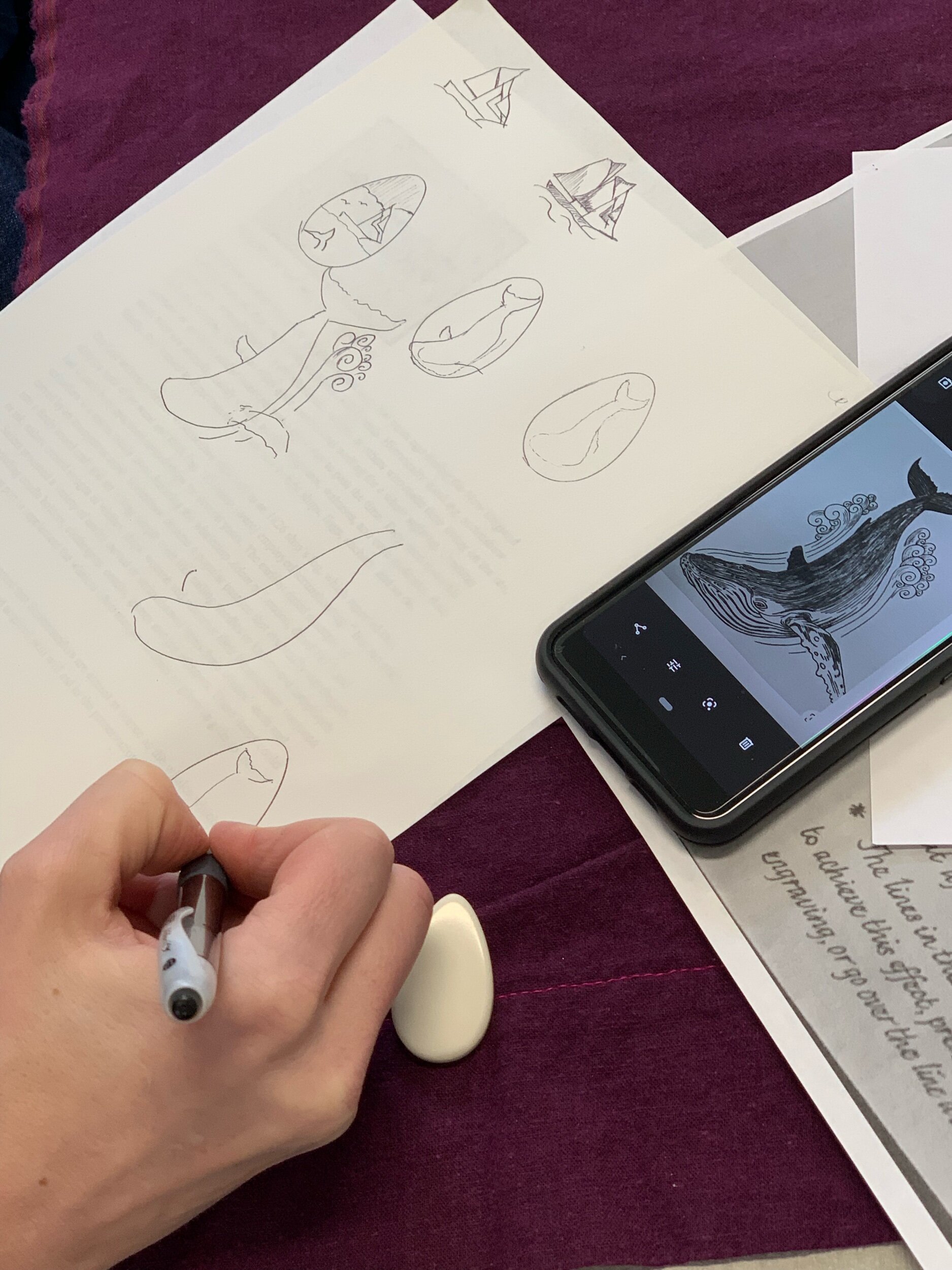
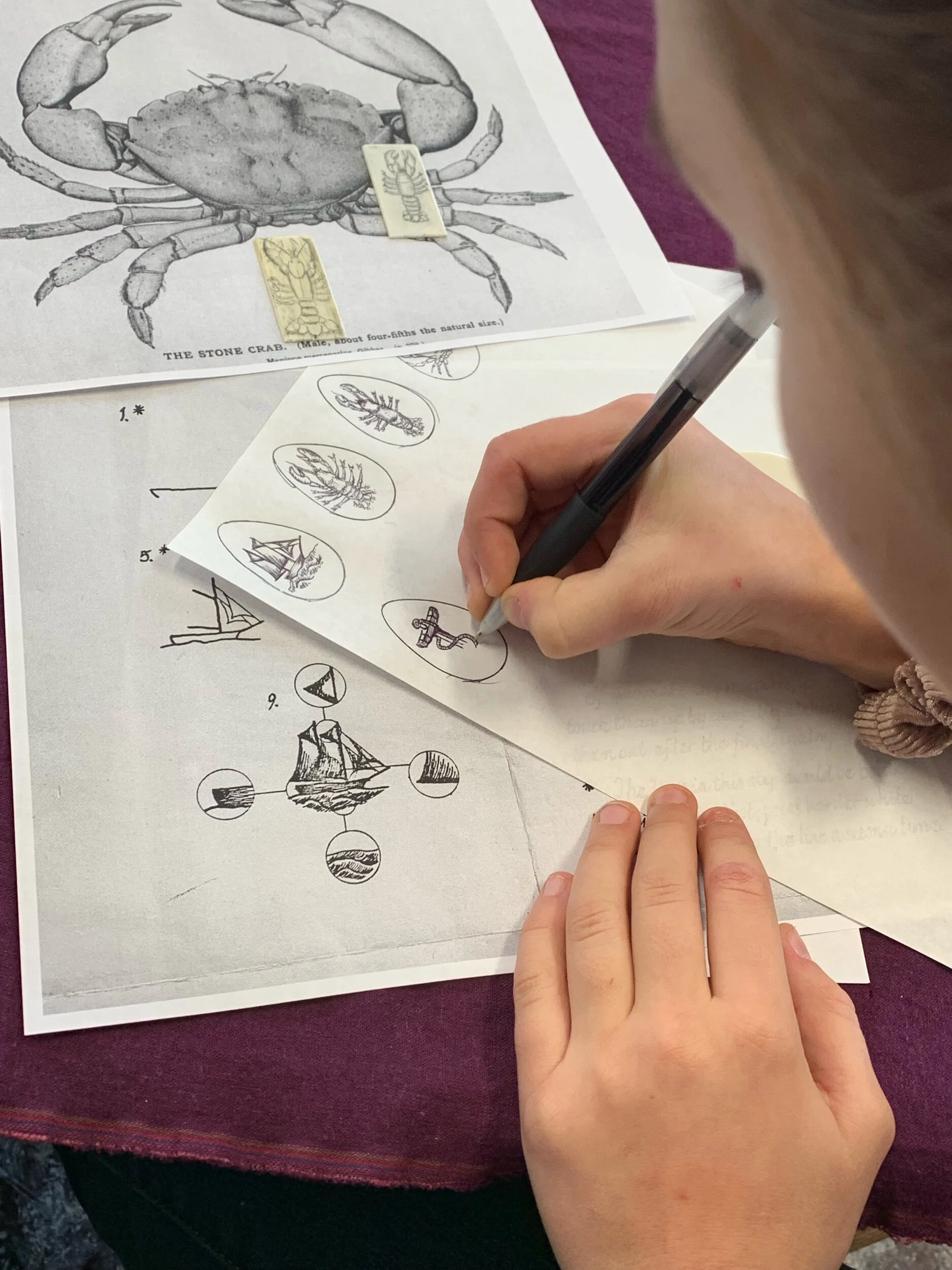
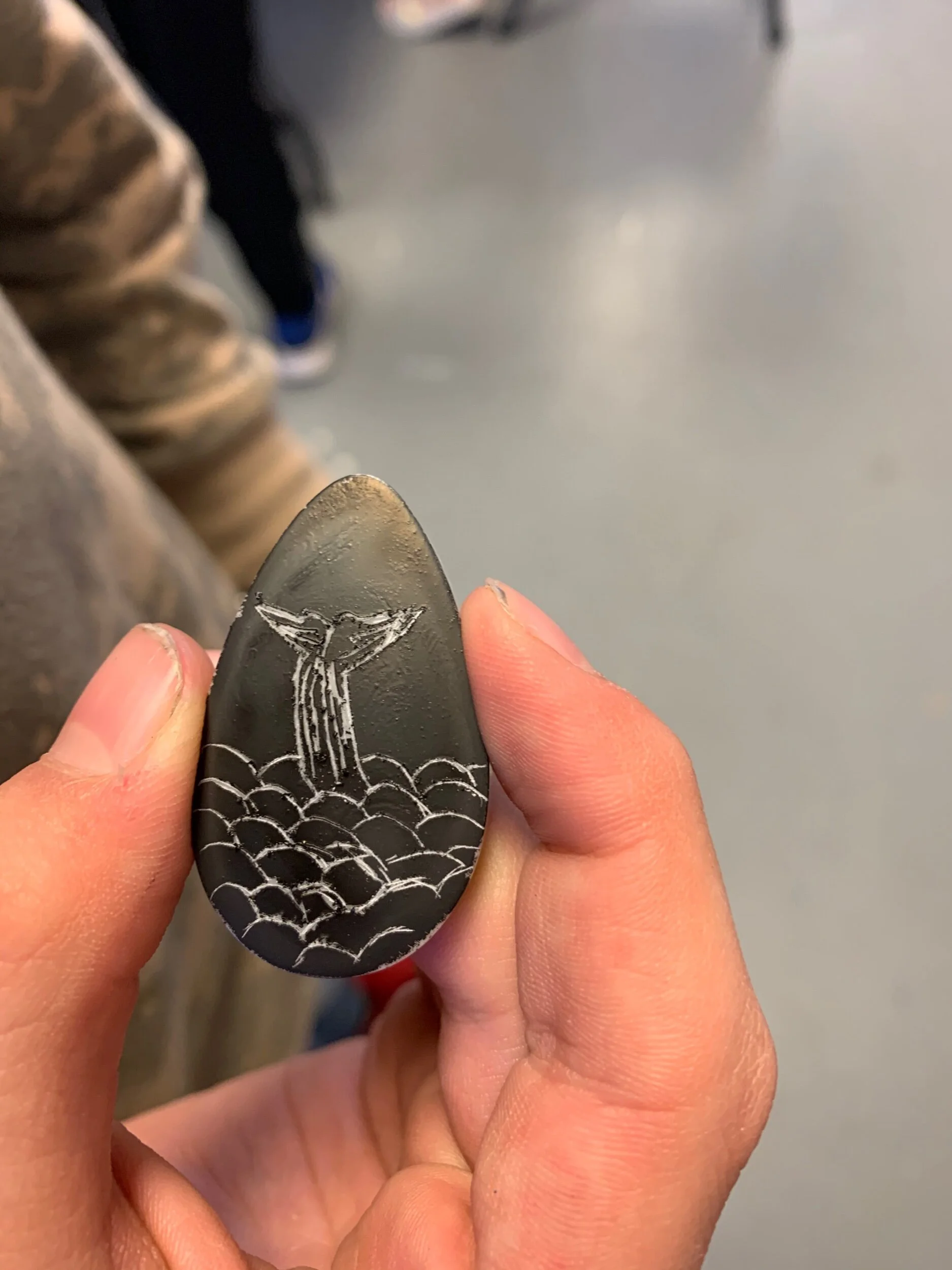
I think one of the hardest things to do in art is to slow down, relax, and take the time to let yourself create with peace. After a few minutes, I told the class just that; and that they had two full hours to create their pieces of scrimshaw.
The Josephy Center in Joseph, Oregon allowed me the opportunity to bring this New England tradition out here in the wild west.
Scrimshaw is relatively recent originating just over 200 years ago during the New England whaling days, the first was created on Sperm whale teeth. Historically speaking, scrimshaw artists (aka “scrimshanders”) were whalemen, sailors, or others who made their living on the sea. Life on a whaling vessel was often quite monotonous waiting for a whale sighting. Creating intricate art on the available materials was a great way to pass the time. They used materials taken from sea animals, mainly whales but also porpoises, walruses, and even mollusks. They tended to depict nautical scenes and motifs: ships, flags, anchors, and so on.
Update: Since holding the class at the Josephy Center, I have taught a number of school age classes the art. Their photos follow the Josephy Center pieces.


For the mess, I moved this art project out to the garage. The paint consistency is critical; too thick and it won’t blend and meld; too thin and it becomes a single color on the whole canvas.

Six year old Aoife made this gorgeous piece




I’ve mentioned before that I love the freedom that almost all children share in their art. They are sure of their strokes, sure of their color choice, sure of just how much they should fill the page.
I spotted Sigge’s drawing on her white board this past weekend and I was wishing it had been created on a chalkboard that I could seal in perpetuity.
Doesn’t this just look like two swing dancers?!

After cleaning out my mother-in-law’s house a few years back, I swore off second-hand shops and antique stores. Forever. But… Friday I found myself inside an antique store- the only access to the art gallery I was going to. And as I left the gallery, this Noah’s Ark leapt into my arms and begged me to take it home.
I was at first dubious and went up to the shopkeeper. “Tell me about that Noah’s Ark.”
“What do you want to know?'“
“Is it made in China mass produced?”
“Let’s go check.”
We cleared the deck and flipped the boat. It is a one-of-a-kind. Sold!

I can’t make out the artist’s name but I am assuming the 8-5-88 is 1988 not 1888

All animals have their partner.

The Tate Museum puts it very succinctly, defining the subject of a still life as "anything that does not move or is dead."
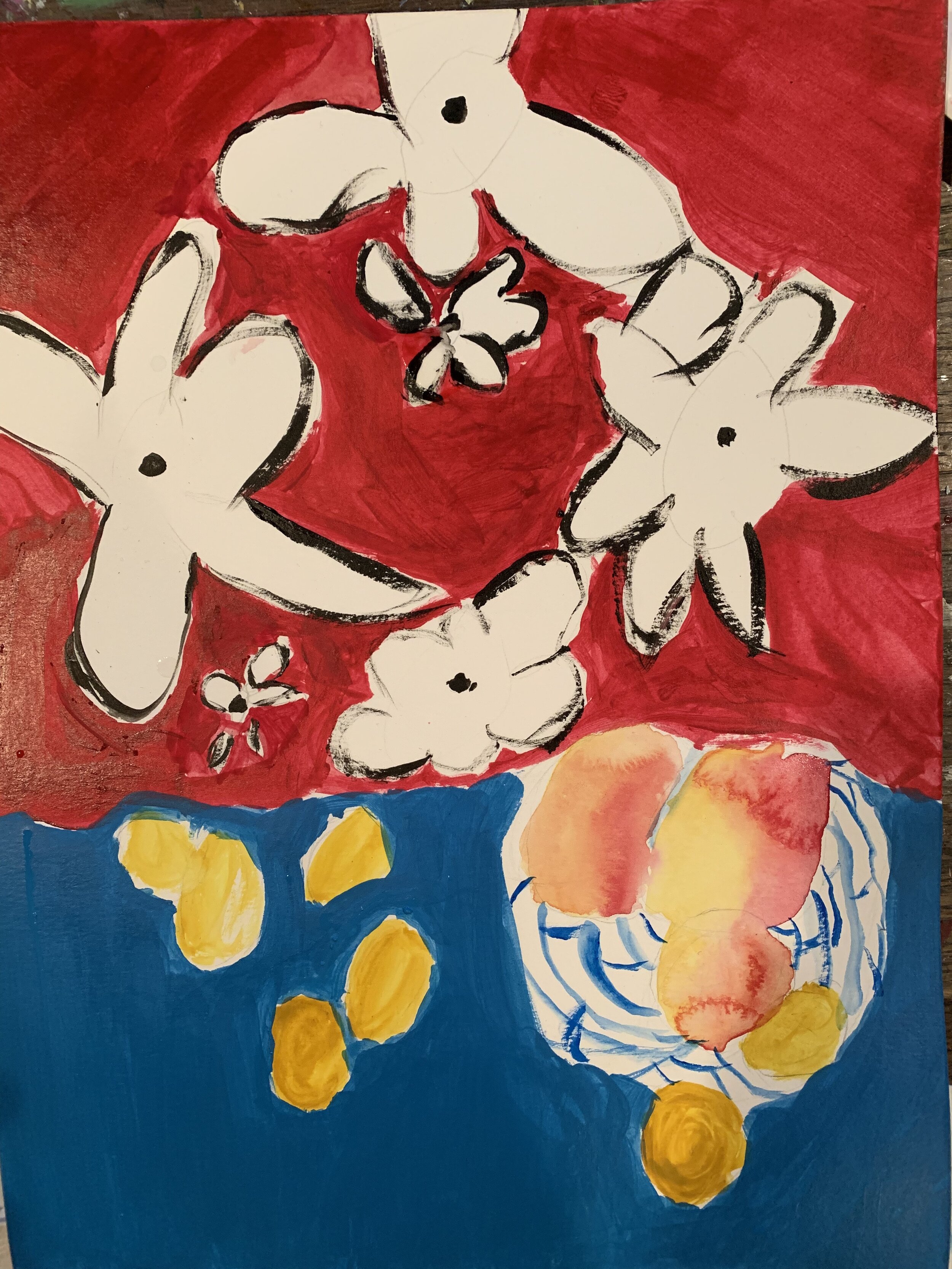
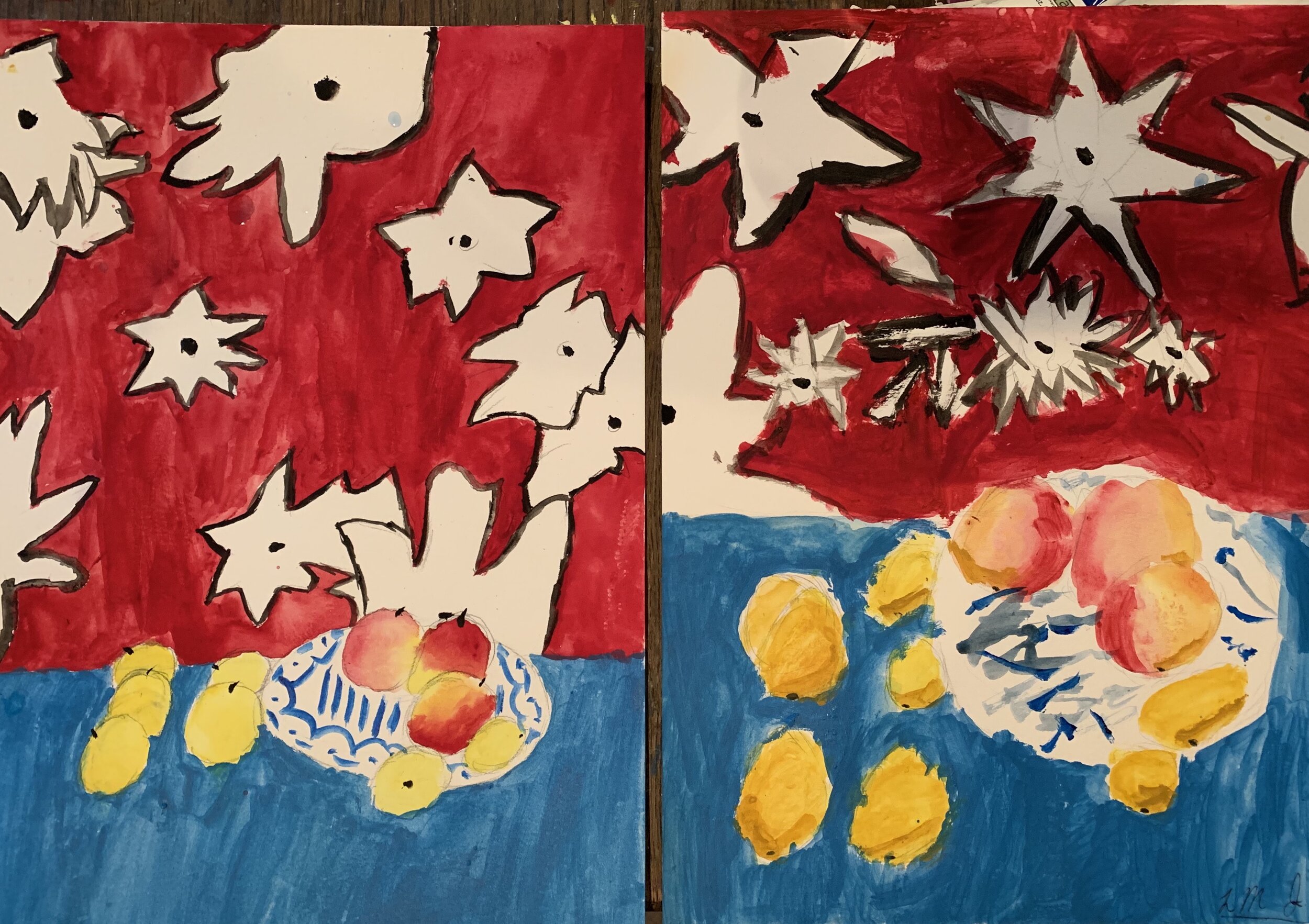
Henri Matisse is said to be one of the most influential French artists of the 20th century. Matisse’s use of straightforward color, inventive figuration, and decorative patterns helped redefine many of the formal tenets of painting. Because of Matisse’s straightforward color and form, he is an accesible artist for young artists.
The alla prima manner—that is to say, completed in one session, without any preliminary underpainting is very freeing. Working alla prima requires confidence, but it is very liberating—the idea is to work rapidly and intuitively, using the brush freely to express your instinctive response to your subject. Acrylic paints are ideally suited to this type of painting because they can be used thickly—straight from the tube—or diluted with water for wash-like effects. And because acrylics dry so quickly, you can apply one color over another within just a few minutes, without fear of disturbing the color beneath.
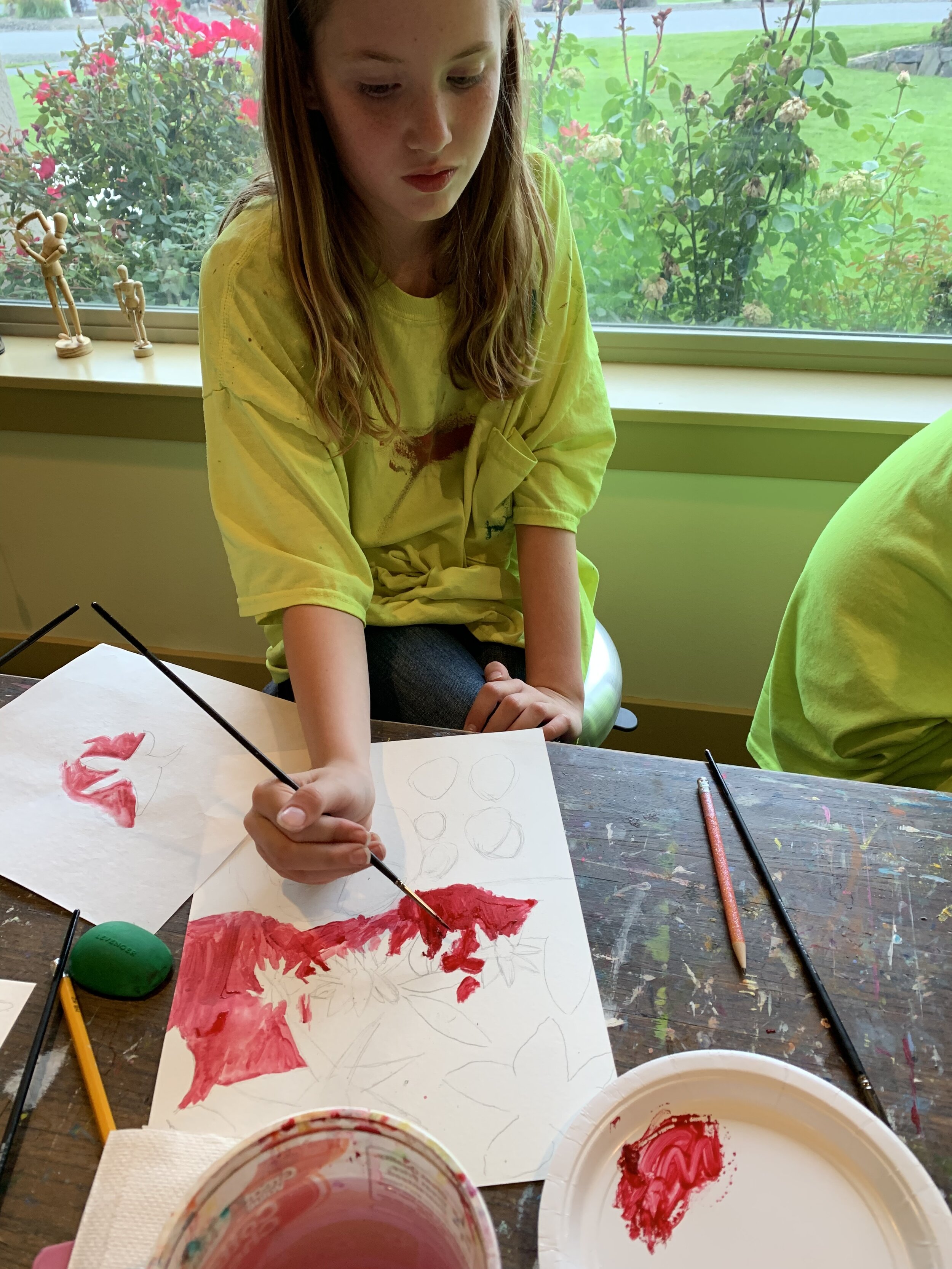
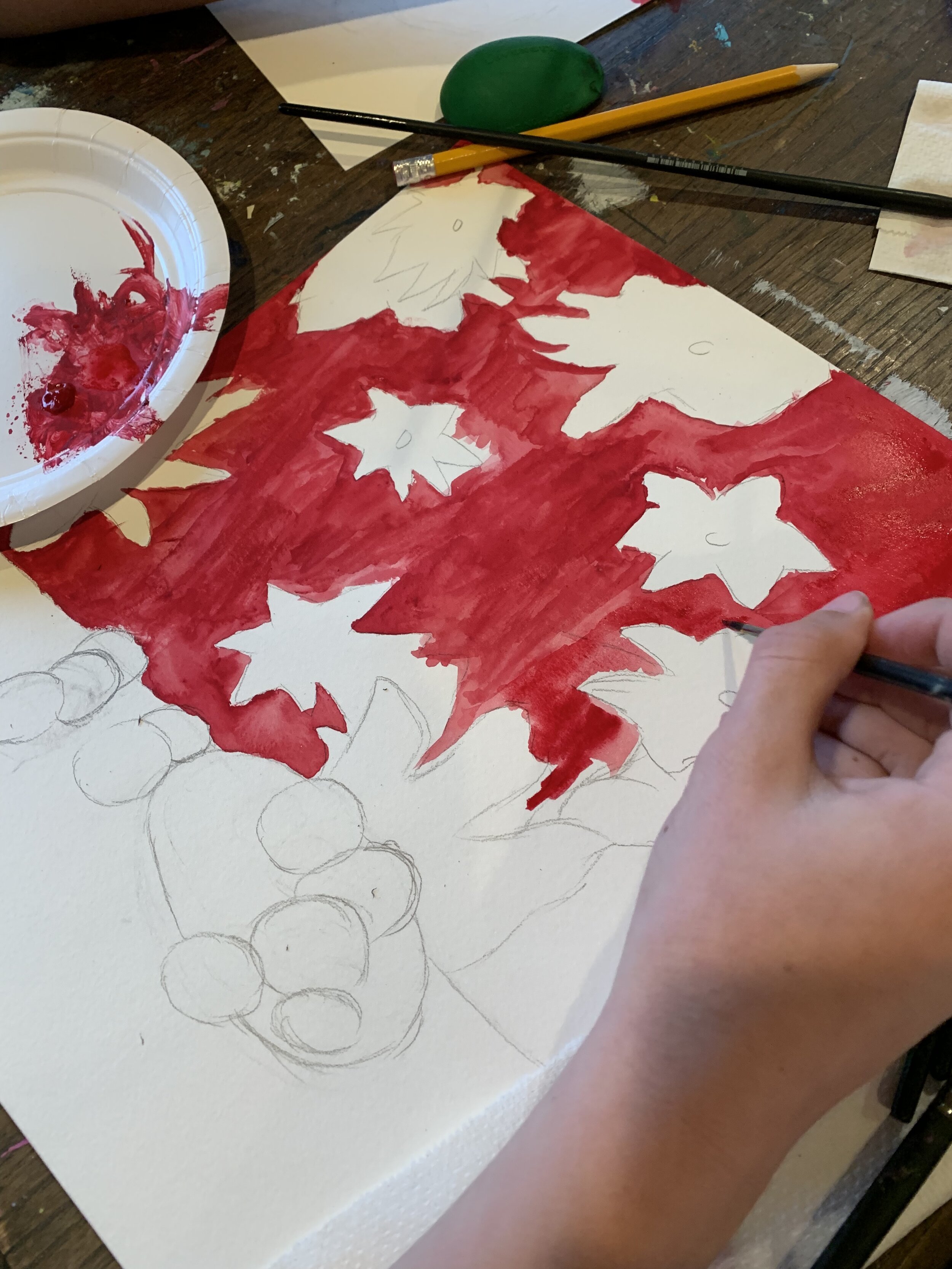
I set up a colorful still life in my studio for my students to paint. They chose either watercolor or acrylic paints but by the end of the class most had ended up with a mixed media painting. We used wet on wet technique in the apples and layering on the quince.
I was thrilled to see the completed pieces completely filling their paper.
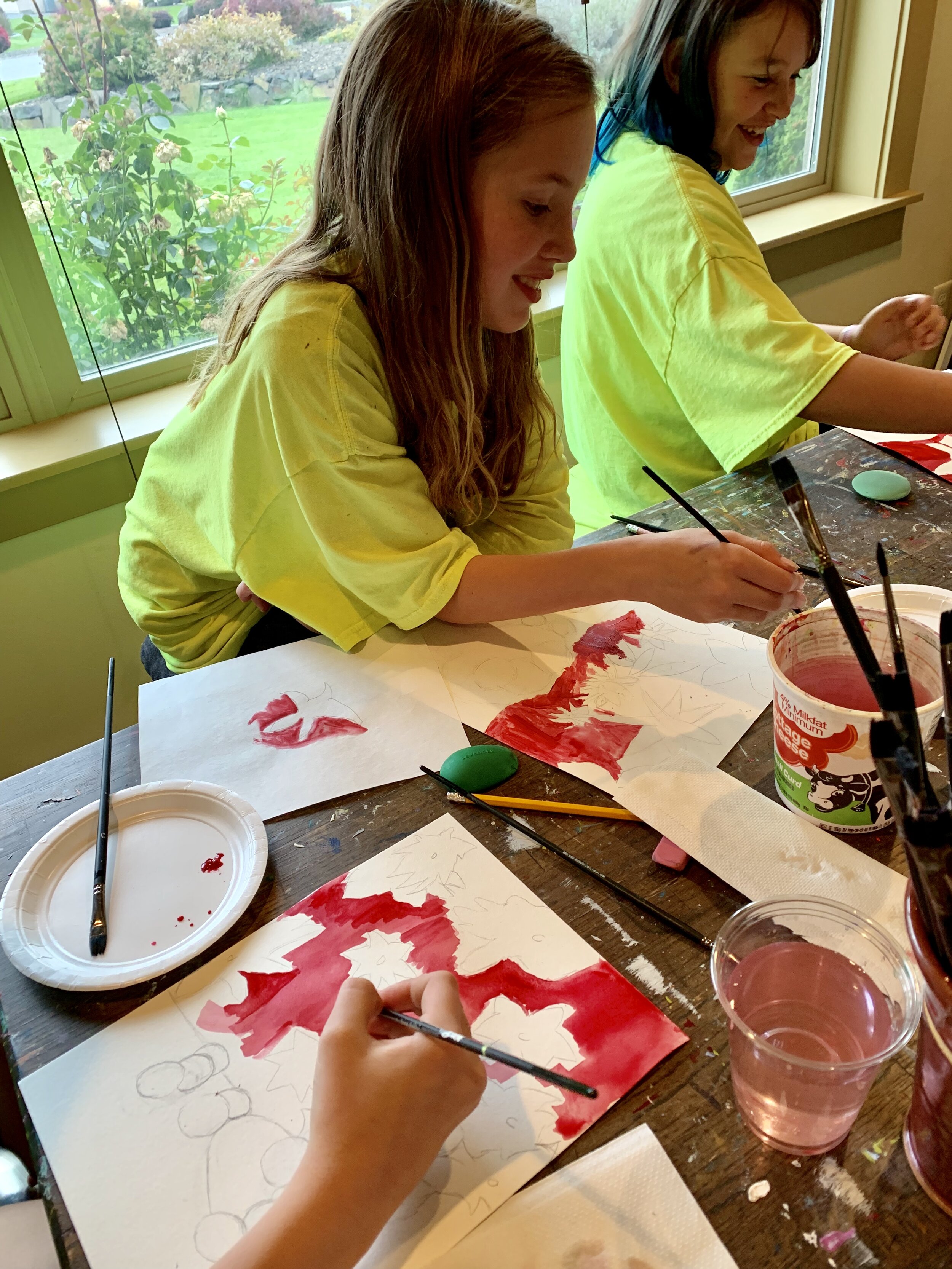

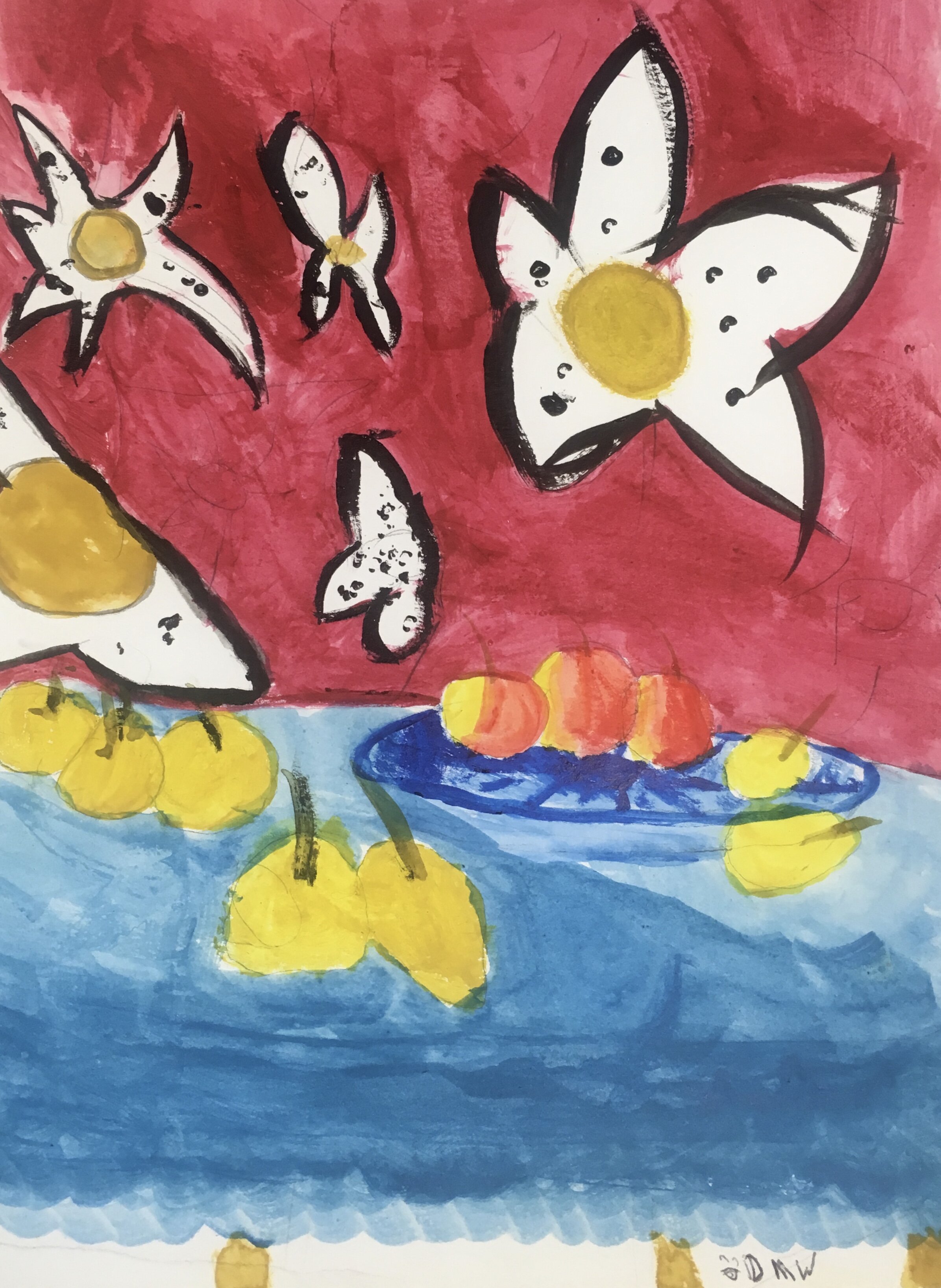


I kept the turquoise washcloths but switched the fabrics and tried my hand at it. I had not painted with watercolor in years and it was very satisfying to use them again.